

Ukraine’s mineral wealth is opening a new chapter in economic recovery and defense strategy. In May 2025, Ukraine and the United States launched a Reconstruction Investment Fund to boost recovery efforts while securing key resources. Under the deal, half of future earnings from minerals will finance Ukraine’s rebuilding projects, and the U.S. will benefit from a steady supply of vital materials.
Why it matters: This partnership not only strengthens Ukraine’s economy but also enhances U.S. national defense capabilities, setting the stage for significant shifts in resource strategy and market dynamics.
Key Elements of the Ukraine Minerals Deal
Ukraine and the United States signed a deal in May 2025 to boost economic recovery and strengthen national defense. Ratified by the Verkhovna Rada on May 8, the agreement creates a Reconstruction Investment Fund focused on critical minerals, rare earths, oil, and gas. Why it matters: The fund will support Ukraine's recovery while giving the United States steady access to strategic resources.
Key components include:
- Fund structure and governance
- Revenue-sharing mechanism
- U.S. contributions and license access
- Strategic defense linkage
Under the deal, Ukraine will funnel 50% of its future earnings from mineral extraction, covering royalties and new extraction rents, into the fund. The United States will contribute either cash or military assistance credits to help offset past support expenses and secure a stable supply of key resources. Oversight may come from the U.S. International Development Finance Corporation, though some operational details remain under discussion.
The pact also bolsters Ukraine’s defense procurement and supply-chain security amid rising regional tensions. By reducing dependence on China for essential minerals, the United States enhances its economic and defense resilience. This initiative not only drives Ukraine’s economic recovery but also strengthens its control over resources that are critical for advanced defense and technology.
Ukraine’s Mineral Resources and Industry Landscape
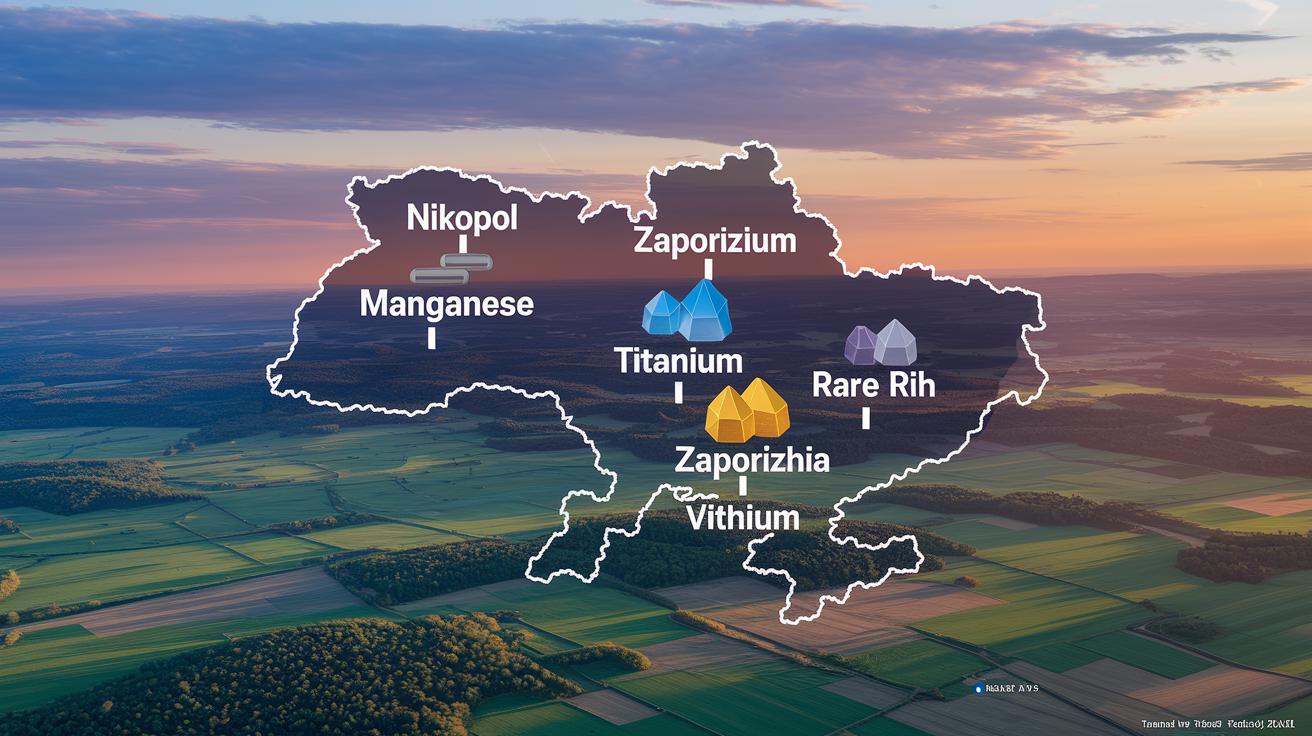
Ukraine has a wide range of valuable mineral resources that drive roughly 5% of its GDP and employ over 100,000 people. Key deposits include manganese in the Nikopol Basin, titanium in Kryvyi Rih, rare earth elements in Zaporizhzhia, and lithium in Volhynia. Geological surveys point to an untapped potential of 30 million tonnes of critical minerals.
Why it matters: Upgrading mining and logistics could unlock significant economic growth and strengthen supply chains for both industry and defense.
| Mineral | Main Deposit Location | Estimated Annual Output |
|---|---|---|
| Manganese | Nikopol Basin | 1.5 million tonnes |
| Titanium | Kryvyi Rih | 0.8 million tonnes |
| Rare Earth Elements | Zaporizhzhia | 0.3 million tonnes |
| Lithium | Volhynia | 0.2 million tonnes |
However, outdated processing plants and limited rail capacity hinder the full potential of this sector. Industry experts argue that modernizing transport networks and upgrading processing facilities is essential to boost production and efficiently distribute these resources. These improvements could transform Ukraine’s mineral reserves into a major engine for economic growth.
Ukraine Minerals Deal: Bright Economic Outlook
Ukraine and the United States have sealed a minerals deal that could boost both short-term liquidity and long-term growth. Under the new agreement, a fund will be established with oversight by the U.S. International Development Finance Corporation. Ukraine will allocate 50% of its royalties and extraction rents, while the United States will contribute through cash payments or military aid credits.
Why it matters: This structure is designed to tighten revenue collection and uphold fiscal discipline, a move that could stabilize resource income and support broader economic goals.
Key elements of the deal include:
- Revenue sharing and allocation
- License access rights
- Security guarantee status
The fund’s management assigns clear roles: Ukrainian authorities will manage resource licenses, while U.S. finance experts guide fund operations. Regular performance reviews and scheduled allocations are built into the framework to ensure transparent reporting and steady cash flow. This setup should help coordinate mineral exploration and maintain consistent extraction activities, providing the oversight busy decision-makers need.
Although the agreement sets strong financial and operational terms, it stops short of offering binding security guarantees for Ukraine. Stakeholders know that while the fund backs strategic resource development, further negotiations may be necessary to secure any firm military assistance in the future.
Geopolitical Implications of the Ukraine Minerals Deal

The US has struck a minerals deal to secure critical resources and reduce reliance on China. This move supports Ukraine’s sovereignty while pushing back against Russian influence. Why it matters: It is a crucial step in an America First strategy that could reshape supply chains for defense and renewable energy projects.
Key points include:
- Diversifying the US supply chain away from China.
- Signaling deterrence to Russia.
- Bolstering NATO cooperation.
- Balancing regional influence.
Experts warn that while the deal strengthens Ukraine’s position, it may not force an immediate change in Russian actions. Moscow is likely to respond gradually rather than with drastic measures.
This agreement forms part of a broader US strategy to secure long-term access to vital raw materials and lower strategic risks. By linking economic policy with defense needs, the US aims to enhance NATO’s security and maintain regional stability while protecting supply chains and reinforcing strategic deterrence.
Economic Impact and Market Forecasts from the Minerals Deal
Ukraine's new minerals deal ties resource extraction directly to defense spending. The funds raised are expected to offset nearly $183 billion in U.S. military aid since 2022. Annual contributions are projected to hit $500 million by 2028, strengthening the link between capital inflows and strategic defense needs. Investors see these steady cash flows as a boost for the mining sector, potentially driving a 10% increase in foreign direct investment over the next five years.
Why it matters: This stable funding stream can modernize mining processes and support defense procurement while reinforcing fiscal discipline.
| Metric | Projection | Timeline |
|---|---|---|
| U.S. Aid Offset | ~$183 billion | Since 2022 |
| FDI Growth | 10% rise | Over 5 years |
| GDP Impact | 2% annual boost | Through 2030 |
Market watchers remain upbeat as these projections suggest the deal will not only stabilize Ukraine's defense financing but also expand its economic base. The additional investment is expected to spur modernization in mining and streamline logistics. Strategic partnerships and improved revenue flows may serve as a catalyst for broad economic growth, adding resilience to Ukraine's fiscal framework.
Stakeholder Perspectives and Transparency Concerns in the Ukraine Minerals Deal
Critics and officials offer sharply contrasting views on the Ukraine minerals deal. Some warn that opaque management and unclear terms could undermine the deal's credibility, while a number of Ukrainian MPs have raised alarms about excessive U.S. influence over revenue control.
Why it matters: Unclear fund governance could risk fiscal sovereignty and impact defense spending priorities.
Key concerns include:
- Parliamentary worries
- NGO demands for stronger oversight
- Rationale behind a dedicated government defense fund
- Expert critiques of the deal's transparency
Legislators are calling for stricter oversight of the fund. They emphasize the need for regular audits and clear reporting schedules to track revenue allocations. Their goal is to establish a sound governance framework that limits external pressures and protects Ukraine’s fiscal independence.
Meanwhile, independent experts and civil society groups propose accountability reforms. They recommend setting up a transparent board, hiring neutral auditors, and enforcing mandatory disclosure for all fund activities. These measures are seen as critical steps to bolster public trust and ensure the fund operates under a clear and accountable mandate.
Implementation Roadmap and Next Steps for the Ukraine Minerals Deal
Ukraine’s minerals deal, approved by the Verkhovna Rada on May 8, 2025, is entering a new phase focused on execution. Authorities will now set up structures to ensure that funds support Ukraine’s economic recovery and defense procurement. The U.S. International Development Finance Corporation (DFC) will complete the fund operations by mid-2026, and upcoming auctions along with royalty collections will soon start showing real results.
Why it matters: A clear plan for moving funds quickly into recovery and defense helps secure both Ukraine’s economic stability and strategic interests.
| Step | Timeline |
|---|---|
| Establish Joint Investment Fund | Q4 2025 |
| Finalize Operational Framework | Mid-2026 |
| Conduct First License Auctions | Q1 2026 |
| Begin Royalty Flows into Fund | Q4 2026 |
| Review Fund Performance and Governance | 2027 |
Final Words
In the action, we see the ukraine minerals deal reshaping resource geopolitics. The agreement establishes a framework with clear fund structure, revenue-sharing and defense linkage, while outlining key milestones from fund launch to license auctions.
The deal’s multifaceted economic impacts and strategic defense benefits illustrate a balanced approach to resource governance and investor confidence. Next steps promise to streamline market success while supporting national resilience. The future looks promising as these developments set the stage for rapid, informed decision-making.
FAQ
A: The deal text outlines revenue-sharing and license terms that form a fund dedicated to defense financing and reducing dependency on China, with Ukraine directing 50% of funds from new mineral licenses.
A: The deal involves projected annual fund contributions of $500 million by 2028, which could substantially offset U.S. military aid and stimulate Ukraine’s mining sector economically.
A: The deal was signed in May 2025 and was approved by the Verkhovna Rada on May 8, 2025, confirming Ukraine’s acceptance of the terms outlined in the agreement.
A: Additional context and public discussion about the deal can be found on platforms like Wikipedia and Reddit, where users share updates and analyses of the agreement’s impacts.
A: The White House supported the deal by endorsing U.S. contributions and strategic measures that ensure future mineral license access and strengthen Ukraine’s defense procurement efforts.
A: Mentions of Trump highlight contrasts with earlier policies; while his administration had different geopolitical approaches, the current deal reflects a new strategy after his tenure.
A: The term “100-year agreement” is informally used to imply very long-term collaboration on mineral resource management, though the formal contract focuses more on immediate revenue-sharing and defense financing provisions.
A: Ukraine holds abundant natural resources, including manganese, titanium, rare earth elements, and lithium, positioning it as a key player in the regional mining sector with significant economic potential.
A: Investors include the U.S. International Development Finance Corporation alongside other public and private entities attracted by Ukraine’s abundant critical mineral deposits and growth opportunities.