

Starbucks revised its store policies by requiring a purchase for entry and tightening guidelines on dress and behavior. The change aims to boost security while maintaining a welcoming atmosphere.
Why it matters: Customers could see longer wait times and altered shopping experiences, which may impact overall store traffic and revenue.
The new rules have sparked debate among shoppers and industry observers, highlighting a broader shift as familiar brands adjust to meet evolving market and safety demands.
Comprehensive Overview of Starbucks Company Policy
Starbucks has revised its internal guidelines to ensure a consistent experience and boost operational excellence. The company ended its seven-year open-door policy and now requires customers to make a purchase to use the restroom or stay in the store. This move balances customer hospitality with business needs and addresses security concerns.
Why it matters: Changes like these could affect customer behavior and store traffic, important for investors and executives watching margins and operational efficiency.
The updated code of conduct bans discrimination, harassment, outside alcohol consumption, smoking, vaping, drug use, and panhandling on premises. Employees must treat every guest equally under U.S. discrimination laws, and tip sharing among staff reinforces a cooperative service culture.
Starbucks also adjusted its appearance rules. Only permanent or semi-permanent hair dyes are allowed to meet food safety standards, and the uniform guidelines now restrict items like white pants. Maintaining strict hand hygiene stays critical, following U.S. Food and Drug Administration standards to ensure drink safety.
Operational changes focus on boosting efficiency. Each partner is assigned a specific station during shifts, and baristas can now handle up to three drinks at once while steaming milk for each separately. Strict observance of operating hours minimizes disruptions from early arrivals.
In January 2025, under CEO Brian Niccol, Starbucks reinforced its mission to be the leading coffee provider and enhance the customer experience across its network. As of 2022, the company operated 9,265 company-run stores and 6,608 licensed locations worldwide, underscoring the broad impact of these policy updates.
Employee Conduct and Ethics Code in Starbucks Company Policy
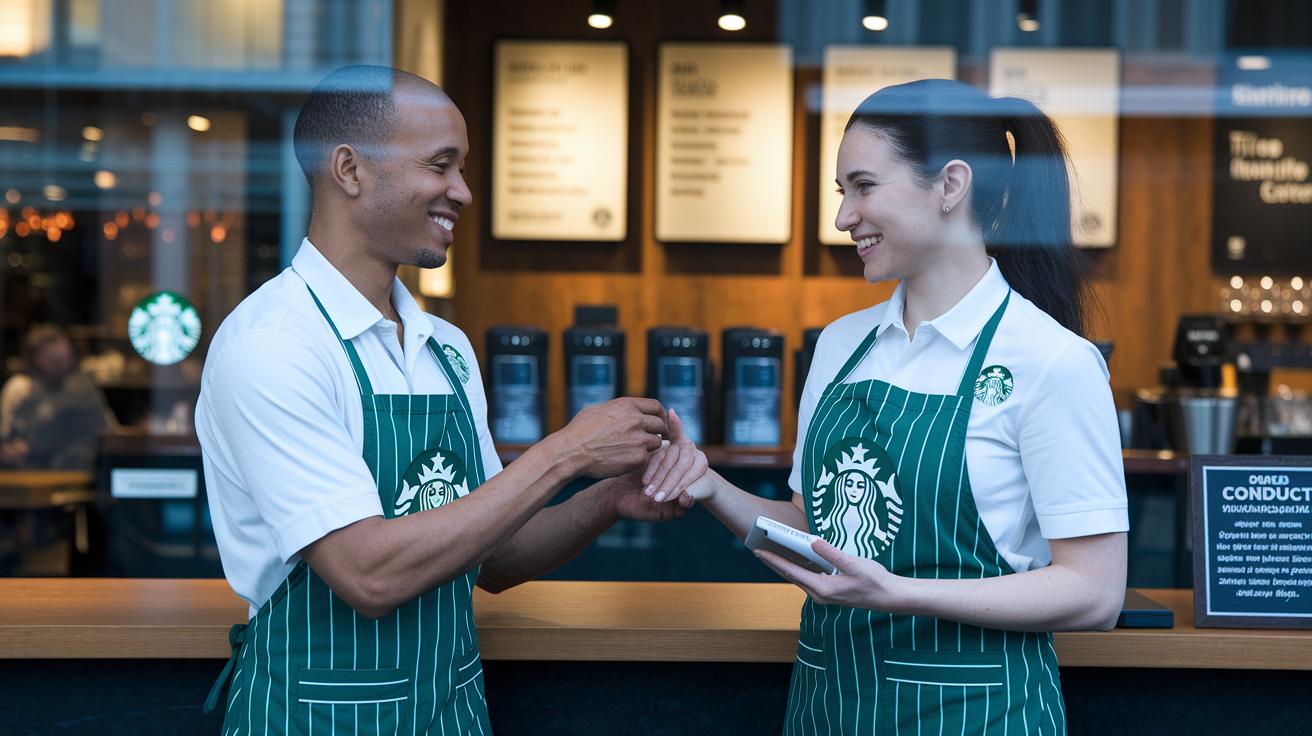
Starbucks requires every partner to follow a clear code that ensures all customers are treated with respect. The policy complies with U.S. discrimination laws and insists that every guest encounter is handled in a fair and consistent manner.
Why it matters: This keeps customer interactions safe and reinforces brand trust.
Prohibited actions include:
- Discrimination or harassment
- Bringing outside alcohol onto store premises
- Smoking, vaping, or using drugs during work hours
- Panhandling inside the store
Partners must also adhere to written conduct guidelines that promote a respectful work atmosphere. Service can only be refused to protect store safety or address specific food allergy risks. For example, if a customer request might disrupt safety protocols, staff should escalate the issue.
This policy framework underscores Starbucks' commitment to a positive in-store environment and clear operational standards.
Appearance and Uniform Standards under Starbucks Company Policy
Starbucks updated its appearance guidelines to boost food safety and present a unified brand image. Under the new rules, partners must use only permanent or semi-permanent hair dyes to lower contamination risks in food preparation areas. In the May 2025 update, staff are required to wear black tops with blue, black, or khaki pants. White shoes are acceptable, but white pants are banned to maintain consistency.
The revised policy also relaxes earlier restrictions on personal adornments. Facial piercings and ear gauges are now more acceptable, and visible tattoos have been permitted since 2014. These changes allow for greater personal expression while keeping operational needs in focus.
Hand-washing protocols have been strengthened to meet U.S. FDA standards. This adjustment is designed to safeguard both staff and customers during drink preparation, reinforcing Starbucks' commitment to high hygiene standards.
| Appearance Element | Current Policy | Historical Change |
|---|---|---|
| Hair Color Policy | Only permanent or semi-permanent dyes allowed | Revised for food safety |
| Piercing & Tattoo Rules | Facial piercings relaxed; visible tattoos permitted since 2014 | Previously banned |
| Uniform Color Scheme | Black tops with blue, black, or khaki pants; white pants banned, white shoes allowed | Earlier policy favored earth tones with stricter limits |
| Hand & Hygiene Requirements | Strict adherence to U.S. FDA standards | Enhanced protocols for cleaner drink preparation |
Operational Procedures Defined in Starbucks Company Policy
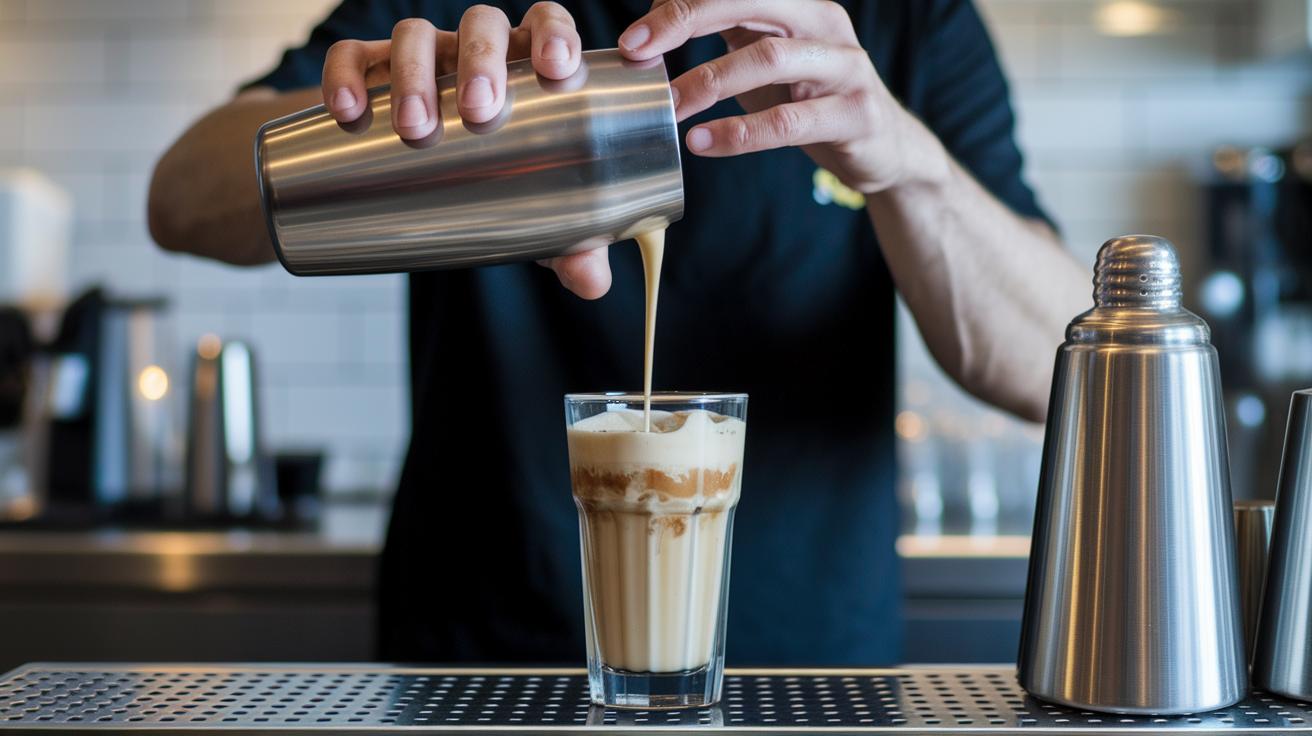
Starbucks has updated its cold beverage process by mandating that each drink receives exactly five shakes. This change ensures even ingredient blending and the proper texture needed for quality beverages.
Why it matters: Consistent shakes improve product quality and operational speed.
The new procedures also clarify the workflow at the cold beverage station. Partners now follow a specific order to manage orders efficiently without repeating earlier role assignments.
Why it matters: A clear sequence minimizes confusion and speeds up service.
Customer Access and Service Guidelines in Starbucks Company Policy
Starbucks announced new store policies that take effect in 2024. The company now requires a purchase for customers who wish to use seating and restroom facilities, reversing a seven-year open-access approach established after a 2018 incident in Philadelphia.
Why it matters: This change impacts how non-purchasing visitors access store amenities while ensuring compliance with legal settlement commitments.
Under the updated guidelines, staff will not ask customers to leave merely for not making a purchase. In line with prior legal agreements, guests who don’t buy can still access restrooms using a key or code. Starbucks will only refuse service in situations involving safety concerns or food allergy risks.
Policy Updates and Strategic Changes under Brian Niccol’s Leadership
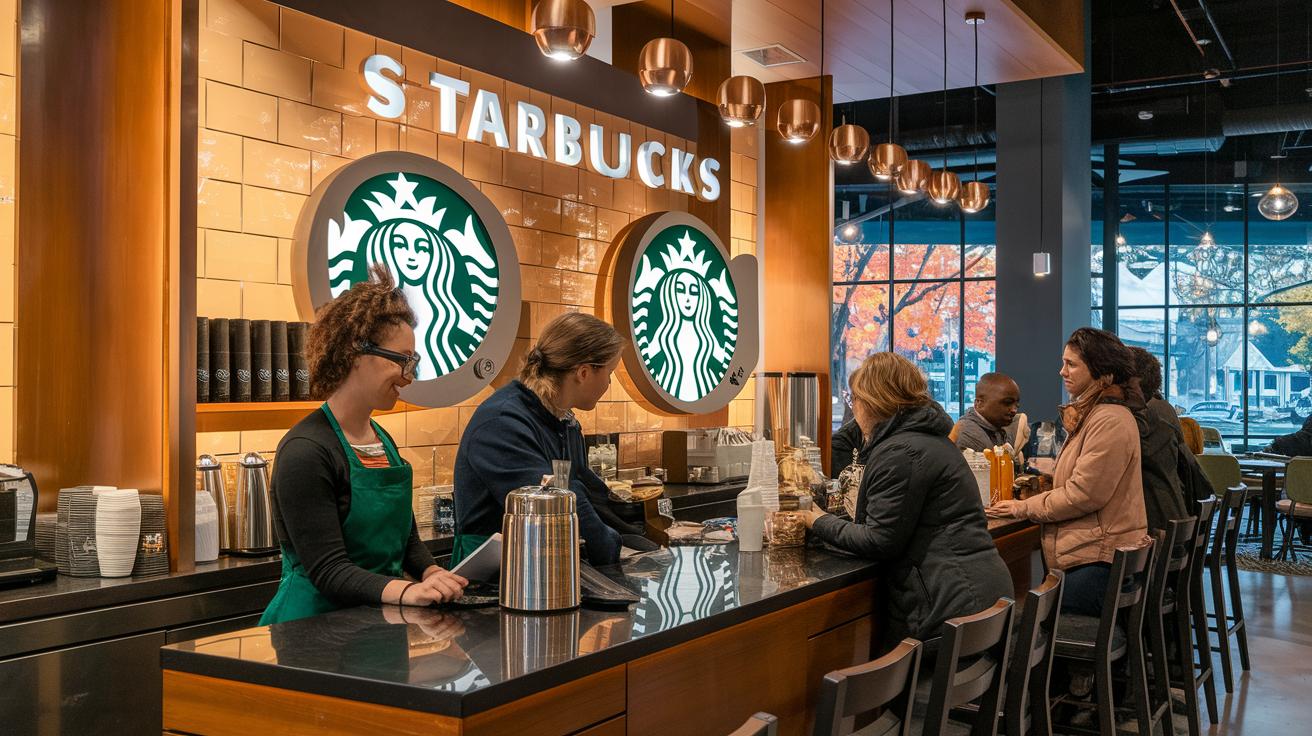
Under Brian Niccol, Starbucks has rolled out a series of bold policy shifts between autumn 2024 and mid-2025 that aim to improve customer service and streamline operations. This restructuring is designed to balance digital upgrades with tighter operational control.
Why it matters: These changes could alter cost structures, enhance customer interactions, and influence strategic market positioning.
Key policy and strategy updates include:
- Sept 2024: Launched the “Back to Starbucks” campaign to sharpen the focus on customer service.
- Oct 2024: Reintroduced self-serve condiment bars, giving guests more control over their orders.
- Nov 2024: Eliminated the surcharge on non-dairy milk alternatives to simplify pricing.
- Jan 2025: Revised the mission statement to stress its role as the premier coffee provider that inspires the human spirit.
- Early 2025: Revamped the mobile app to simplify order customization and manage peak-time demand.
- Apr 2025: Piloted an aperitivo menu featuring sparkling beverages and light snacks.
- May 2025: Expanded the Green Apron Service, added a dedicated cup-handoff role, and updated the dress code to require black tops with blue, black, or khaki pants.
- Feb 2025: Executed corporate layoffs, cutting 1,100 positions as part of an organizational restructure.
- Sep 2025: Closed more than 600 North American stores to streamline operations.
- Jun 2025: Announced store interior enhancements and new digital menu boards to elevate the in-store experience.
Each step is part of a concerted effort to boost service quality and operational efficiency in a competitive market.
Scale and Global Reach of Starbucks Company Policy Implementation
Starbucks operates 9,265 company-run and 6,608 licensed stores as of 2022. Each outlet follows a central policy that delivers consistent customer service, safety, and quality. The framework includes flexible guidelines that let regional teams adjust practices to meet local needs without losing the core standards.
Final Words
In the action, this blog post provided a clear snapshot of Starbucks company policy. It outlined employee conduct, updated appearance guidelines, and detailed operational procedures along with customer access rules. Recent strategic changes under CEO Brian Niccol were also examined, highlighting key policy adjustments and the scale of global implementation.
This practical overview helps decision-makers grasp the essentials of the starbucks company policy. The insights lead to a better understanding of internal compliance and operational shifts, setting a positive tone for navigating the evolving market landscape.
FAQ
What is the Starbucks company policy?
The Starbucks company policy outlines employee conduct, appearance standards, operational procedures, and customer service guidelines applied across both corporate and licensed locations.
Where can I access Starbucks policy documents, like PDFs or the Code of Ethics?
Policy documents such as the employee handbook, policy PDFs, and the Code of Ethics are available via the company’s internal portal or HR channels.
What does the Starbucks employee handbook 2025 include?
The Starbucks employee handbook 2025 details updated dress codes, conduct standards, and operational procedures, incorporating recent changes introduced by CEO Brian Niccol.
What is the new work policy for Starbucks?
The new work policy defines station assignments, order preparation rules, customer service expectations, and revised operating hours to streamline daily operations.
What is the Starbucks ethics policy?
The Starbucks ethics policy requires non-discriminatory behavior, bans harassment and misconduct, and prohibits outside alcohol, smoking, vaping, drugs, and panhandling on its premises.
What is the Starbucks office policy?
The Starbucks office policy covers internal administrative guidelines and operational standards, ensuring consistent in-store procedures and service expectations across locations.
How can I contact Starbucks Ethics and Compliance?
Employees should refer to the internal HR portal or official company communications to obtain the accurate Ethics and Compliance contact details.
What is unique about Starbucks policies in California?
While maintaining core guidelines, Starbucks policies in California include extra measures to meet specific state labor laws and regulatory requirements.