

McDonald’s Blueprint for Global Success
McDonald’s now operates nearly 40,000 outlets by letting independent franchise operators run each restaurant and by leveraging a smart real estate strategy. This model reduces risk while driving consistent profits.
Why it matters: Investors and business leaders should note that McDonald’s approach shows how simple operational changes can fuel global growth, potentially guiding similar strategies in other sectors.
McDonald’s Business Model Sparks Smart Success
McDonald’s now runs nearly 40,000 restaurants in over 100 countries. Most of these outlets are operated by independent franchisees, which helps the firm expand quickly while keeping its operations consistent. Why it matters: This model boosts profitability and supports steady growth.
Founded in 1948 with its Speedee Service System and later transformed by Ray Kroc’s 1961 acquisition, McDonald’s built its success on a strong leasing business. The company considers property leasing a key revenue source while sticking to a clear mission: to remain its customers’ favorite place to eat and drink. This focus on quality and affordability has helped build lasting customer loyalty.
By blending a reliable franchise model with focused real estate investments, McDonald’s ensures that every restaurant works like a finely tuned machine. This consistent operation builds trust with families and busy professionals alike and sets the stage for robust domestic and international growth.
Franchising Architecture of McDonald’s Business Model
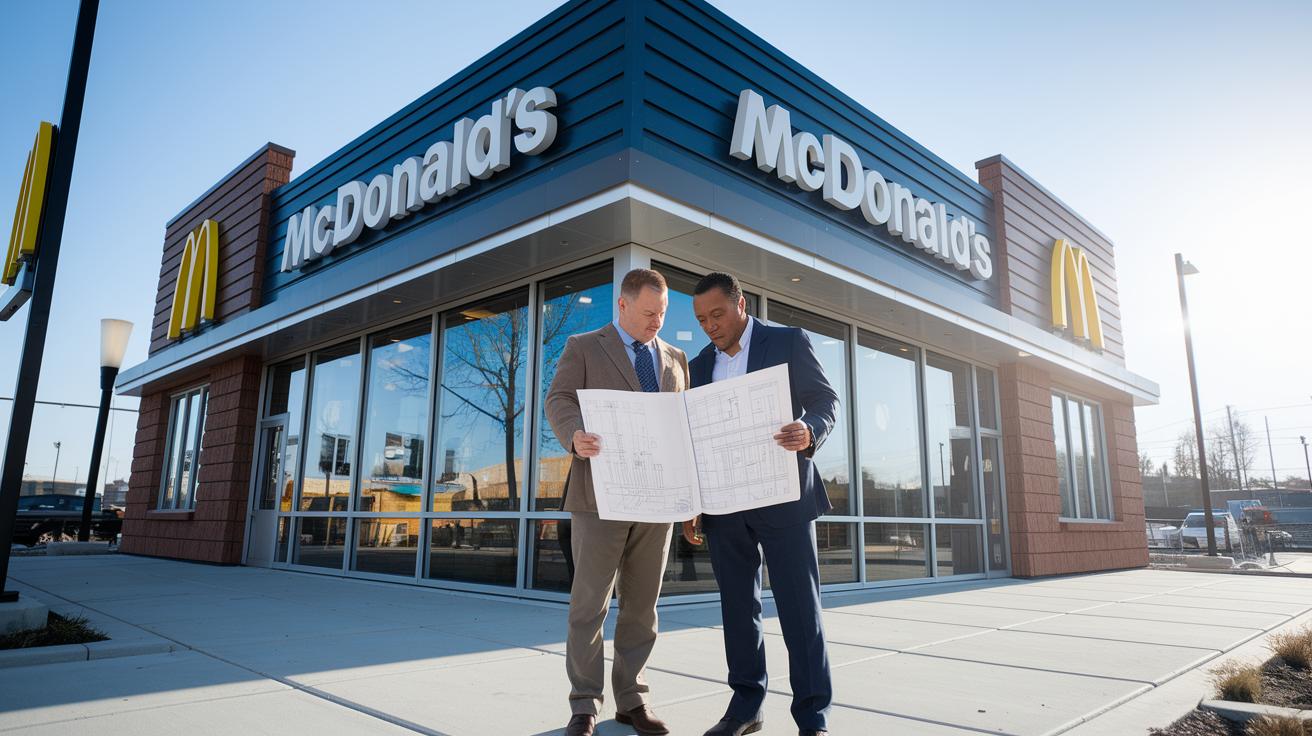
McDonald’s uses a corporate franchise model based on three distinct arrangements that drive its growth.
The first type, Developmental License, lets franchisees finance and build new restaurants with minimal input from McDonald’s. Franchisees handle design and operations themselves, meeting strict brand standards and reducing risk for the company.
The second structure, Conventional Franchising, requires franchisees to secure or own land and sign long-term leases, often 20 years, while paying royalties based on sales. This solid approach delivers reliable rental income and enforces strict operational rules. For example, one franchisee committed to a 20-year lease, showing deep trust in McDonald’s standards.
The third option, Affiliates, demands less capital by allowing franchisees to invest partially alongside McDonald’s. This setup balances risk and reward while following the same strict protocols.
By keeping standards uniform across all models, McDonald’s ensures a consistent brand experience and fuels growth through an entrepreneurial, yet tightly regulated, network.
Revenue Streams and Asset Management in McDonald's Business Model
McDonald’s earns revenue from several channels that extend beyond direct food sales. The company charges franchise fees and collects royalties based on a percentage of every outlet’s sales. This method ties the income to each franchise’s performance, so a drop in one store’s quality can indicate a need for a wider review.
Rental income offers another steady revenue source. McDonald’s controls or owns the real estate for many of its restaurants, and franchisees pay fixed lease fees. This arrangement provides reliable cash flow, even when food sales vary, and supports long-term stability.
Company-operated stores also play a role in the overall revenue mix. Although they make up only 5% of the total outlets, the sales from these locations help strengthen the company’s income portfolio.
| Revenue Source | Mechanism | Role |
|---|---|---|
| Franchise Fees & Royalties | Percentage of sales | Main |
| Rental Income | Fixed lease payments | Steady cash flow |
| Company Sales | Direct transactions | Supplemental |
Operational Efficiency in McDonald’s Business Model

McDonald’s relies on speed, uniformity, and strict cost management to drive its business. Standardized cooking practices with precise timing ensure that every meal meets quality benchmarks, regardless of location. One outlet’s revamped kitchen cut meal prep time by 15 seconds, allowing hundreds more orders daily. This efficiency boosts both service speed and customer satisfaction.
Optimized kitchen layouts reduce unnecessary movement, helping employees serve customers faster and with fewer mistakes. Worldwide training programs make sure every crew member follows the same proven steps in food preparation and service, keeping the focus on continuous improvement.
Centralized purchasing lets McDonald’s benefit from bulk deals that lower costs while upholding quality standards. Managers use real-time quality checks and performance metrics to adjust operations immediately.
Why it matters: This systematic approach to efficiency reinforces McDonald’s reputation for reliability. It creates a scalable model suited to managing growth and delivering consistent results across the globe.
Supply Chain Optimization in McDonald’s Business Model
McDonald’s supply chain is a critical pillar of its global operations. The fast-food giant secures long-term contracts with trusted suppliers for meat, produce, and packaging. This approach guarantees that every outlet receives high-quality ingredients and meets strict food safety standards.
Why it matters: A resilient supply chain reduces risk and supports smooth operations across thousands of restaurants.
Regional distribution centers are key to the system. These centers use advanced inventory-management software to streamline deliveries and keep stock levels precise. One center’s real-time tracking system cut stock discrepancies by 12% in one quarter, highlighting effective risk control.
McDonald’s embeds strict food-safety protocols and traceability into every step. The company requires detailed records from its suppliers, ensuring a fast response to quality issues. A network of backup suppliers means that if one vendor falters, others can step in immediately, reducing the risk of disruption.
By combining these measures, McDonald’s delivers consistent service and reinforces its commitment to regulatory compliance and efficient risk management. This integrated model not only secures operational excellence but also strengthens the company’s competitive position.
Marketing and Brand Equity in McDonald’s Business Model

McDonald’s builds its marketing on a clear promise: affordable prices, easy access, and reliable service. The company reaches families, young professionals, and students through TV spots and digital ads that deliver a consistent message. This steady focus on value boosts its brand identity and earns customer trust.
Social media is key to keeping the brand relevant and engaging. Instagram and TikTok campaigns drive awareness while sparking direct interaction through creative visuals and quick deals. For instance, mobile app promotions provide special offers and loyalty points that encourage repeat visits. In one case, a mobile push increased order frequency by 15%, turning casual browsers into regular customers.
Sponsorships in sports and movies help align McDonald’s with popular cultural moments. In-store signs and limited-time menu items create urgency that leads to trials and word-of-mouth buzz. Visual messaging in restaurants reinforces the brand promise with every visit.
These focused tactics and multi-channel strategies maintain McDonald’s place as a leader in customer engagement and market positioning.
Global Expansion and Real Estate Strategy in McDonald’s Business Model
McDonald’s property strategy fuels its worldwide growth by focusing on busy, high-traffic locations. The company reviews city centers, highway junctions, and dense neighborhoods using detailed demographic and accessibility research. A study of commuter habits near major hubs confirmed that sites along busy highways drive high daily traffic and boost rental income.
A critical part of the plan is a rigorous feasibility study. McDonald’s examines local competition, accessibility, and community demographics before signing any lease or making a purchase. Long-term negotiations are standard, with contracts often lasting several decades. This strategy locks in key sites and secures stable rental payments, which improve overall financial performance.
McDonald’s also customizes restaurant designs and menus to suit local tastes. Adjustments to interior layouts, exterior signage, and even the menu help strengthen ties with the community. By combining precise property management with local market customization, the chain builds a robust roadmap for global expansion and sustainable revenue growth.
Business Model Canvas and Competitive Advantages in McDonald’s Business Model
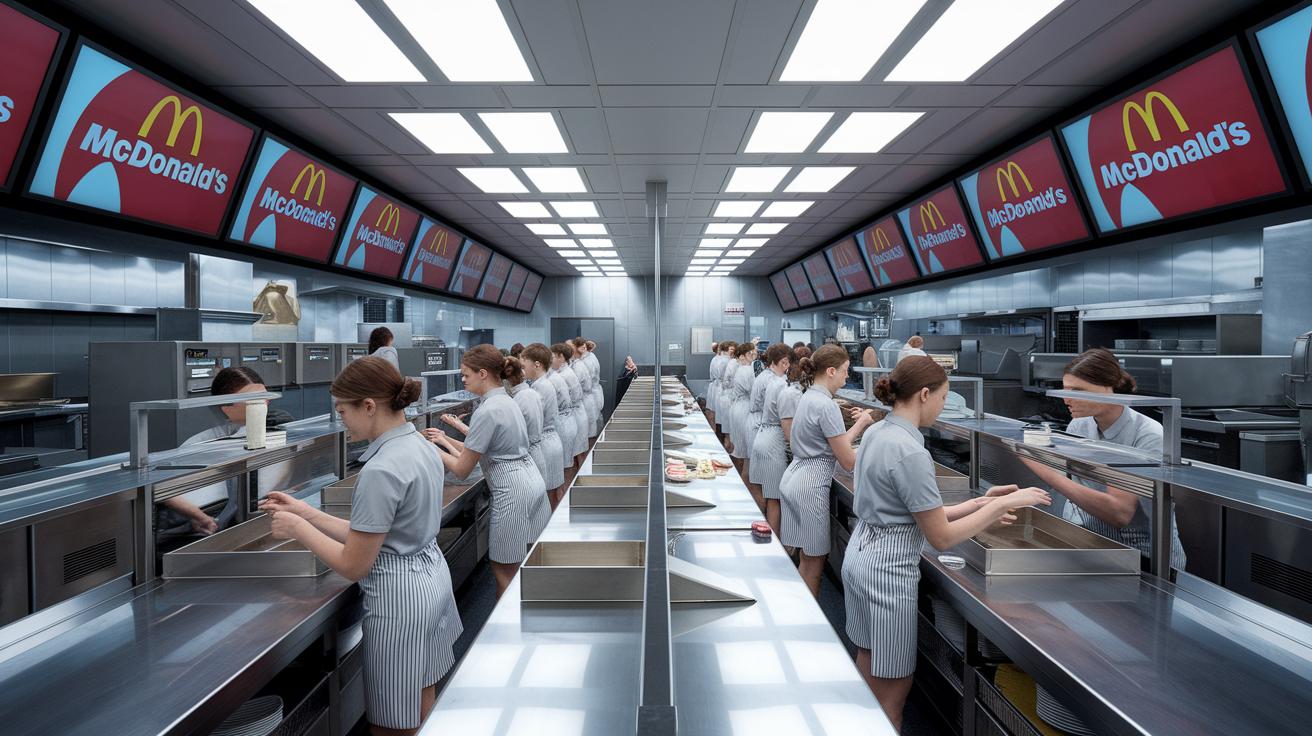
McDonald’s operating model ties operational efficiency, franchising, supply chain management, marketing, and global growth into one strong framework. By blending key partnerships, core activities, and a clear value promise, the company creates a system where uniform kitchen setups ensure quality and discipline in costs. Before standardization, many local outlets struggled to maintain consistency – a fact that highlights the impact of McDonald’s early efficiency efforts.
This model also connects customer relationships with cost structures and revenue streams to sharpen McDonald’s edge in the market. Its multichannel strategy, which covers in-restaurant service, drive-thru, mobile app orders, and third-party delivery, not only boosts customer engagement but also balances revenue during market shifts. By aligning all aspects of operations, McDonald’s stands apart from rivals that rely on fragmented systems, driving both scale and resilience.
Final Words
In the action, the discussion broke down how McDonald's business model utilizes franchising, real estate management, and streamlined operations to drive global growth. The review also covered revenue streams, supply chain resilience, and targeted marketing strategies backed by data. Each section laid out the methods behind consistent quality and profitability, emphasizing hands-on tactics that support sustained market leadership. Overall, the insights offer clear guidance for understanding the strengths of McDonald's business model and its continuous positive impact on the fast-food sector.
FAQ
Q: What does McDonald’s business model real estate refer to?
A: The McDonald’s business model real estate refers to the company’s practice of owning or leasing prime locations and earning rental income from franchisees as a key revenue driver.
Q: What is a McDonald’s business model PDF?
A: The McDonald’s business model PDF typically provides a detailed document outlining the company’s strategies in franchising, real estate, operations, and revenue generation that support its global growth.
Q: What does a McDonald’s business strategy analysis cover?
A: The McDonald’s business strategy analysis covers how the firm leverages franchising, real estate ownership, and operational standards to maintain market leadership and drive international growth.
Q: What is included in the McDonald’s business model Canvas?
A: The McDonald’s business model Canvas presents key elements such as partnerships, core activities, value propositions, customer segments, channels, cost structures, and revenue streams, forming its competitive framework.
Q: How is McDonald’s business model explained?
A: McDonald’s business model is explained as a blend of franchising and strategic real estate investments that secure consistent quality, efficient operations, and strong revenue through multiple income streams.
Q: What is an example of McDonald’s business model?
A: An example of McDonald’s business model shows how the company uses standardized procedures, franchise fees, rental income, and direct sales to create a consistent customer experience and reliable revenue.
Q: What is the business model of McDonald’s in CodyCross?
A: The business model of McDonald’s in CodyCross is presented as an interactive summary highlighting its franchising system, real estate strategy, and multiple revenue sources in an engaging puzzle format.
Q: What does McDonald’s business description include?
A: McDonald’s business description includes its global network of nearly 40,000 restaurants, primarily franchise-operated, supported by a strong real estate strategy and efficient operational systems.
Q: What is McDonald’s business structure?
A: McDonald’s business structure features a predominantly franchised system, where about 95% of outlets are owned by franchisees, with the corporation maintaining a smaller portfolio of company-operated locations.
Q: What are the 5 P’s of McDonald’s?
A: The 5 P’s of McDonald’s encompass product, price, place, promotion, and people, which collectively drive its brand consistency, market presence, and operational excellence.
Q: How much money does an owner of a McDonald’s make?
A: An owner of a McDonald’s earns income primarily from franchise royalties and rental payments, though actual earnings depend on factors like location performance, local demand, and operational costs.
Q: What is the McDonald’s operational model?
A: The McDonald’s operational model focuses on standardized food preparation, strict quality control, efficient service techniques, and centralized procurement to ensure consistency and profitability across all outlets.