


Digital banks operate differently from traditional lenders. They focus on specific market segments that follow unique rules and standards. Each segment acts like a dedicated highway for customers with specialized needs.
Why it matters: Understanding these distinct market sectors can help decision-makers strategically allocate resources and refine their capital planning. This analysis breaks down the dynamics of these niches and shows how tailored approaches can improve overall strategy.
Industry Verticals: Inspiring Market Sectors
Industry verticals zero in on focused segments within our broader economy. These segments operate under unique regulations, technology standards, and market dynamics that meet specific consumer needs. For instance, while the finance sector covers many business areas, a vertical like digital banking targets a well-defined opportunity with tailored compliance standards and customer expectations.
Think of verticals as dedicated lanes on a highway, each governed by rules suited for different types of vehicles. Just as one lane facilitates fast cars and another supports heavy trucks, each vertical is designed to meet the core demands of its market niche. In healthcare, strict rules and specialized technology set the field apart, while finance verticals concentrate on robust risk management.
Understanding these precise segments gives decision-makers clear, actionable insights. This focused analysis enables leaders to spot growth opportunities, manage risk effectively, and allocate resources with precision.
Industry Verticals vs. Horizontal Markets

Companies that pursue vertical strategies design tailored solutions to meet very specific customer needs. They build products and compliance measures that speak directly to niche market segments and help secure higher profit margins through specialized expertise.
In contrast, horizontal strategies deliver broad services aimed at multiple industries, allowing companies to scale rapidly and tap into diverse revenue streams.
Why it matters: Your choice between a vertical or horizontal strategy affects resource allocation, product development, and ultimately, market performance. Vertical approaches offer deep market insight and strict regulatory compliance, while horizontal tactics leverage scale and diversified customer bases.
- Customization
- Investment Focus
- Regulatory Complexity
- Market Size
- Competitive Intensity
Decision-makers must weigh these trade-offs carefully. Firms that choose vertical strategies benefit from focused expertise and precise product offerings, though their growth may be limited. Meanwhile, horizontal market players enjoy broader reach but sometimes face challenges in maintaining product relevance across different sectors.
Key Industry Vertical Examples and Trends
Healthcare, finance, adtech, agtech, and cleantech drive market trends with distinct challenges and opportunities. Healthcare players must meet HIPAA rules (protecting patient privacy) while adopting advanced med-tech to improve care. In finance, firms adhere to strict KYC/AML guidelines (customer verification and anti-money laundering measures) and boost digital banking platforms to serve more complex demands. Adtech innovators are moving away from traditional cookies, using semantic data methods that change digital engagement. Meanwhile, agtech pioneers use AI to develop biopesticides that transform farming practices, and cleantech companies are cutting water use dramatically through revolutionary conservation technologies.
| Vertical | Example Company | Key Trend |
|---|---|---|
| Healthcare | Meditech Solutions | HIPAA compliance & advanced med-tech |
| Finance | Digital Bank Inc | KYC/AML protocols & digital banking |
| Adtech | Qwarry | Semantic data replacing cookies |
| Agtech | Terramera | AI-driven biopesticides |
| Cleantech | Orbital Systems | Water usage reduced up to 90% |
These examples show how each specialized sector combines tech innovation with tight regulatory standards to drive growth. In both healthcare and finance, strict compliance coexists with cutting-edge technology to ensure secure and efficient operations. Adtech is redefining data practices, while agtech and cleantech are proving that environmental and efficiency goals can reshape traditional markets. For executives and investors, this convergence means that investing in targeted, innovative strategies can unlock new growth avenues in today’s complex market.
Emerging Spaces as Future Industry Verticals

Emerging spaces are early-stage market sectors with high potential that have not yet become firmly established industries. PitchBook tracks over 85 such sectors that are drawing seed and Series A funding, showing strong early investor interest. These markets introduce innovative business models and game-changing technologies that push the boundaries of traditional industries. Both investors and startups are keen on these sectors because they offer a chance to tap into leading-edge trends before they evolve into fully formed, high-growth industries.
Why it matters: Early engagement in these sectors can shape long-term market trends and open new revenue opportunities.
Key examples include:
- Ghost kitchens: Delivery-only food service models that eliminate traditional dine-in operations.
- Clean meat: Lab-grown meat offering a sustainable alternative to conventional animal farming.
- Micro-mobility: Compact and environmentally friendly transport options, like electric scooters and bikes, that are transforming urban commuting.
Monitoring these emerging sectors helps businesses and investors adjust strategies to meet evolving consumer demands and capitalize on upcoming technological shifts.
Leveraging Data and Analytics Across Vertical Markets
Data is the backbone of decision-making in specialized markets. Leaders use custom dashboards, market maps, and valuation guides to track key performance indicators (KPIs) and set benchmarks against the competition. This hands-on approach lets decision-makers adjust strategies swiftly based on clear, visual data.
- Dashboard types
- Heat maps
- Trend lines
- Comp-sheet visuals
By aligning analytics with market-specific needs, companies keep their finger on the pulse. Regularly updated dashboards deliver real-time metrics, while heat maps pinpoint performance highs and lows. Trend lines spotlight emerging patterns that could shape future strategies. Comp-sheet visuals simplify side-by-side comparisons across segments.
Why it matters: This disciplined use of data helps businesses spot opportunities, reduce risks, and allocate resources more effectively, driving steady growth in targeted markets.
Strategic Roadmaps for Industry Vertical Expansion
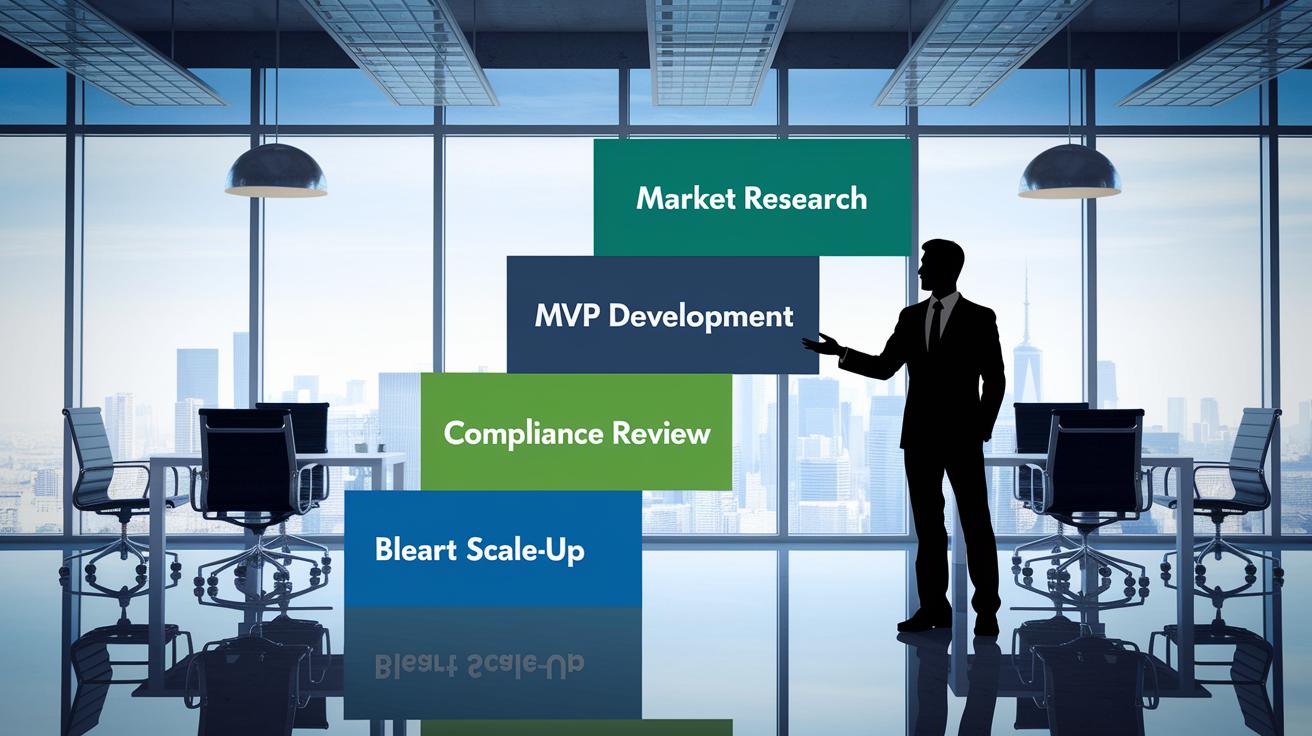
A detailed, step-by-step plan helps companies enter new market niches quickly and safely. Clear digital tactics align resources with market needs and reduce risk in competitive fields.
- Market Research – Study industry trends and competitor behaviors to plan your market entry.
- MVP Development – Build a minimal product version to test core features and collect early customer input.
- Compliance Review – Check regulatory requirements and industry standards to ensure your product meets legal and operational rules.
- Scale-Up – Expand gradually by refining operations and extending market reach as real-world feedback confirms your strategy.
Following this structured approach makes it easier to identify market gaps and achieve sustainable growth. Early research reveals unmet consumer needs while a swift MVP launch exposes practical insights. A thorough compliance check prevents delays from legal issues. During expansion, companies should invest in strong systems and excellent customer service to maintain momentum. Skipping steps or rushing growth can lead to product mismatches and regulatory hurdles. Regular performance reviews help companies adjust strategies and secure a lasting position in new industry verticals.
Regulatory Dynamics in Specialized Vertical Markets
Industry players face unique rules that shape how they operate. In healthcare, companies follow HIPAA to protect patient information. Fintech firms stick to strict know your customer (KYC) and anti-money laundering (AML) guidelines to block illegal activities, while agtech businesses secure EPA approvals to meet environmental standards.
Changing laws can raise entry barriers and spark new rounds of innovation. Regulations force companies to push their product development and sharpen their risk management.
- Barriers to entry
- Faster research and development
- Increased compliance costs
Companies are building strong compliance strategies to keep up. Many are hiring dedicated teams to track legal updates, and technology now automates compliance checks and monitors market changes in real time. By integrating these efforts with their overall strategy, companies can avoid fines and even turn regulatory pressure into a competitive edge, making them more agile as standards evolve.
Final Words
In the action, this article outlined how industry verticals shape strategic decisions, defining niche segments, comparing market approaches, and spotlighting emerging spaces. The post broke down the highway analogy, clarified regulatory demands, and explained how data-driven analysis guides targeted strategies. Each section offered clear examples and practical steps for evaluating market segments and planning expansion.
This comprehensive guide shows how a focus on industry verticals can drive smarter decision-making and open doors to new opportunities for growth.
FAQ
Q: What is an industry vertical?
A: The term “industry vertical” means a niche sector within a broader market that focuses on specific regulatory, technological, and customer requirements.
Q: What are industry verticals and horizontals?
A: The difference between industry verticals and horizontals is that verticals target specialized market segments while horizontals cover broad, cross-industry services and products.
Q: What are some examples of industry verticals?
A: Examples of industry verticals include healthcare, finance, adtech, advanced manufacturing, agtech, and cleantech—all addressing unique market needs and regulatory guidelines.
Q: What is a sub-vertical in business?
A: A sub-vertical in business refers to a more specific market segment within a larger industry vertical that tailors its offerings to an even narrower customer base.
Q: What is an industry vertical example?
A: An industry vertical example is the healthcare sector, which adheres to HIPAA regulations, employs advanced med-tech, and is defined by its stringent compliance requirements.
Q: What are the 7 verticals of business?
A: The 7 verticals of business can include sectors like healthcare, finance, technology, consumer goods, industrials, energy, and services, each with distinct market characteristics and strategies.
Q: What are the 4 categories of industry?
A: The 4 categories of industry are commonly divided into consumer, industrial, technology, and service sectors, organizing businesses by their core market focus.
Q: What are the 11 industry sectors?
A: The 11 industry sectors include healthcare, finance, consumer goods, technology, industrials, energy, utilities, materials, real estate, telecommunications, and services, each presenting unique market dynamics.
Q: What are technology verticals?
A: Technology verticals refer to highly specialized segments within the broader technology field, such as cybersecurity, fintech, or healthtech, where tailored solutions meet distinct industry demands.
Q: What information does an industry verticals PDF include?
A: An industry verticals PDF typically provides detailed market insights, lists of key sectors, trending regulations, and case studies to help professionals with targeted strategic analysis.
Q: What are industry horizontals?
A: Industry horizontals address needs that cut across multiple sectors by offering generalized products or services that are applicable to various industry verticals.