


Can a handshake truly secure a multi-million-dollar agreement without a written contract? In many settings, a firm handshake replaces endless paperwork and long, drawn-out legal processes. Why it matters: Relying solely on trust can speed up negotiations but may expose businesses to risks when key details are missing.
This analysis looks at handshake deals, agreements based solely on personal honor, and evaluates both their advantages and pitfalls. It highlights how a simple gesture can accelerate decision-making while stressing the need for clear communication to avoid costly misunderstandings.
Understanding the Handshake Deal Definition and Fundamentals
Handshake deals are agreements based on trust, not paperwork. Business partners rely on their word and personal honor to seal a deal, much like two entrepreneurs shaking hands on a multi-million-dollar agreement.
Why it matters: This reliance on integrity speeds up negotiations but can leave parties exposed to misunderstandings.
Key elements of a handshake deal include a clear verbal promise, the presence of a witness, and subsequent documentation of the key terms. Businesses often choose this route to bypass lengthy legal processes.
However, without written records, enforcing agreed terms can be challenging. Unlike formal contracts with detailed clauses, handshake deals create room for disputes if each side remembers different details. Written contracts provide clarity and a tangible reference, reducing the risk of costly disagreements.
Handshake deal: Pure Trust in Action
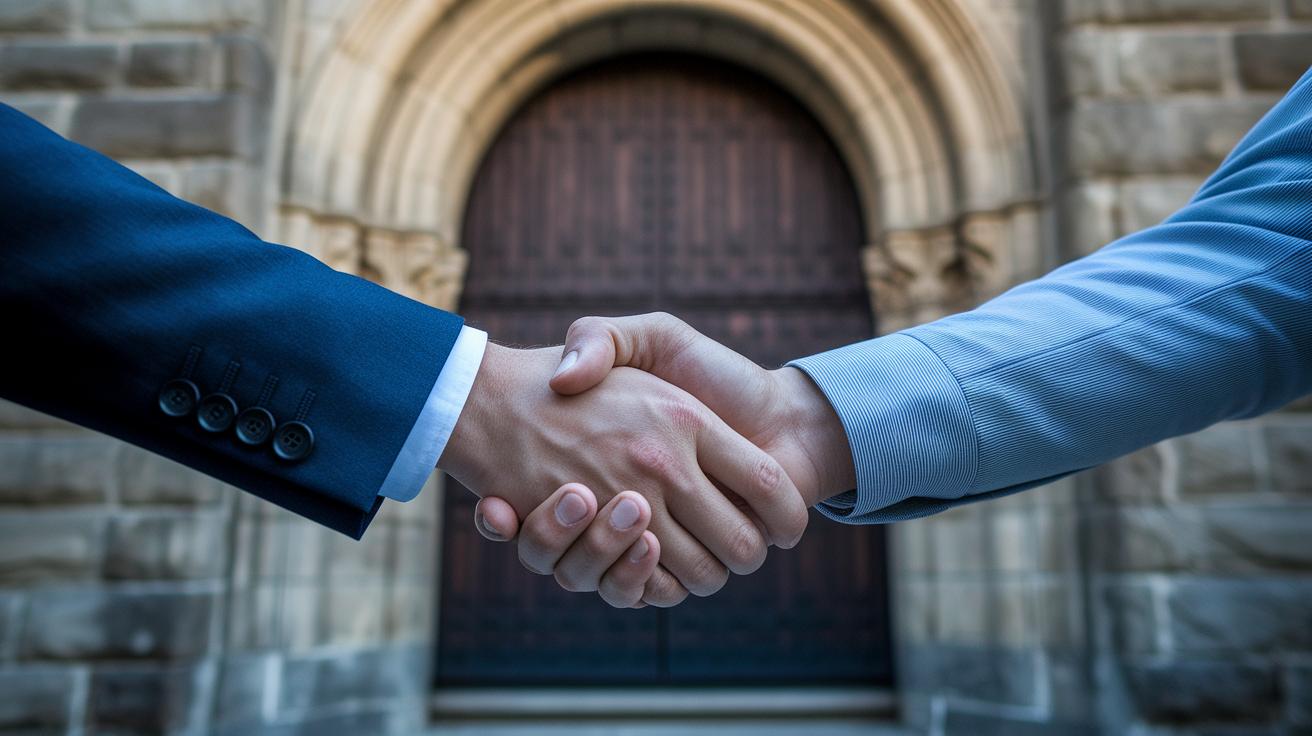
Handshake deals have long signified honor and mutual respect. Dating back to ancient trade, merchants in medieval Europe and East Asian guilds sealed transactions with a firm clasp, a clear sign of trust without a written contract. Early traders even believed that a strong handshake guaranteed honesty, much like a handwritten promise shows today.
Top investors such as Warren Buffett still rely on the handshake to finalize high-stakes agreements. In face-to-face negotiations, this gesture shows clear commitment to the terms, reinforcing the longstanding tradition of personal trust in business. Even as legal frameworks evolve, the handshake remains an effective way to cut through paperwork and secure mutual understanding.
The enduring handshake highlights that despite technological progress, the human element continues to be crucial for closing deals and fostering long-term partnerships.
Legal Enforceability of Handshake Deals
Handshake deals can be legally binding when key conditions are met. Oral contracts are enforceable if the agreement has clear terms, capable parties, and often a witness who can later verify the deal. Courts have backed these deals when signs of partial performance, such as an initial payment or beginning of services, support the existence of a binding promise.
Why it matters: Knowing that a handshake can be enforceable helps executives, investors, and advisers assess risk and strategy when entering deals without a formal contract.
Disputes frequently emerge in multi-tier growth agreements. For example, retrospective rebates often cause disagreements over targets, rates, or the structure of the deal. Without written documentation, each side may recall the terms differently. In such cases, judges must rely on witness statements and supporting documents to determine the parties' true intent.
Key conditions for enforceability include:
- Clear, unambiguous terms
- A witness who observed the handshake
- Evidence of partial performance that aligns with the agreed terms
Legal professionals recommend that parties formalize important points right after the handshake. A prompt written follow-up, such as an email or memo summarizing the main commitments, can prevent disagreements and serve as concrete evidence if disputes occur. Courts prefer tangible records because these documents confirm what both sides intended, ensuring the legal promise behind the handshake stays intact.
If a dispute arises, the lack of a formal contract can complicate enforcement. Quickly recording the agreed-upon terms not only strengthens enforceability but also helps prevent differing interpretations later.
Weighing Trust and Risk in Handshake Deals

Handshake deals depend on long-established relationships where speed and low legal fees offer an immediate solution for swift agreements. They rest entirely on personal memory and mutual trust.
Memory gaps pose a significant risk. Without written records, each party can later recall the terms differently, especially during unexpected events like economic slowdowns or health crises. Such shifts in memory may spark disputes over the agreed scope or timeline.
Key risks include:
- Memory lapses that alter agreed details.
- Shifting interpretations during disagreements.
- The lack of a formal process to resolve disputes.
Overall, while these informal deals cut costs and save time, they also bear the risk of unpredictable recall and differing interpretations.
Best Practices for Strengthening Handshake Deal Clarity
After a handshake, it is crucial to document the agreement without delay. Quickly follow up with an email or memo that outlines the agreed terms. This written record minimizes the risk of future misunderstandings and memory lapses.
Digital collaboration tools are invaluable for preserving deal details. They centralize terms, signatures, and message threads so everyone can refer back to them. Timestamps and version tracking add extra security. For example, send a follow-up email on the same day stating, "Our deal includes a $2 million investment contingent on reaching quarterly targets." Such specifics can be key if disputes later arise.
Why it matters: A clear and verifiable record strengthens trust and accountability while reducing potential for future disputes.
Key actions include:
- Drafting a written summary immediately after the handshake.
- Using digital platforms to capture deal terms and signatures.
- Recording the contact details of any witnesses.
- Implementing version tracking for any updates to the agreement.
Case Studies of Successful and Challenged Handshake Deals

Warren Buffett closed a cash purchase of a utility company using only a handshake. Before finalizing the deal, he personally confirmed every key financial number by checking bank statements and credit card records. His deep reputation and rigorous due diligence meant that trust was backed by hard facts.
Ray Kroc made an informal handshake agreement with the McDonald brothers in 1955 that helped launch a fast-food empire. Relying on a long negotiation process, his gesture set the stage for mutual trust and satisfaction. This simple act of commitment eventually evolved into one of the world's best-known brands.
One tech startup’s deal with a distributor shows the risks of relying solely on verbal agreements. In this multi-tier growth deal, unclear targets led to disputes over retrospective rebates during a downturn. Without written records, both sides remembered the terms differently, highlighting the danger of relying on memory.
Key takeaways include:
- Always follow up a verbal agreement with written documentation to avoid misunderstandings.
- Verify financial records to ensure that a trust-based deal is solid.
- Use formal contracts as a tool to resolve future disputes.
Final Words
In the action, we broke down what defines a handshake deal and its roots in business trust. We examined its history, legal standing, and the balance between quick agreements and the risk of miscommunication. We also outlined steps to back up a verbal pact with simple written follow-up. Real-world cases underscored both the benefits and pitfalls of relying solely on trust. This concise guide reinforces that a well-supported handshake deal can drive swift and smart decision-making for business professionals.
FAQ
What does a handshake deal mean?
What is a handshake deal at McDonald’s?
Can handshake deals be legally binding?
What are handshake deal examples and common synonyms?
Is there a handshake deal template available?
Why does Trump use the handshake approach?
What does a handshake deal movie depict?