


Global Growth Outlook Remains Steady
Despite some economic challenges, leading data shows that a full-blown global recession remains unlikely. According to recent IMF reports, while several nations have registered negative GDP over consecutive quarters, overall output has not fallen below key recession thresholds.
Why it matters: Investors and business leaders can take heart from robust performance in major regions that supports a positive near-term outlook.
Revised growth forecasts suggest a slowdown in some areas. However, strong regional economies continue to provide a solid foundation for future expansion. This analysis explores what the numbers really mean and why certain parts of the global economy remain strong despite mixed signals.
Defining a Global Recession: Criteria and Current Outlook
A global recession occurs when the world economy slips into negative GDP growth for two consecutive quarters. This is different from a downturn that affects just one country. When several nations experience declines, it signals a slowdown in economic activity on a global scale. The International Monetary Fund (IMF) notes that such a recession must show sustained contraction across multiple regions rather than being limited to a single area.
Current IMF findings indicate that while some countries face economic challenges, a global recession is not expected this year. Why it matters: Investors and business leaders should note that, despite isolated struggles, the overall global performance remains above the recession threshold. Individual economies might falter, but their collective output does not trigger recession criteria.
Uncertainty also plays a major role, with the term appearing over 100 times in IMF reports. This high frequency reflects the many unpredictable factors influencing growth. Key indicators such as employment trends, inflation, and trade volumes will continue to guide assessments of emerging risks.
IMF Revised Growth Projections and Global Recession Signals
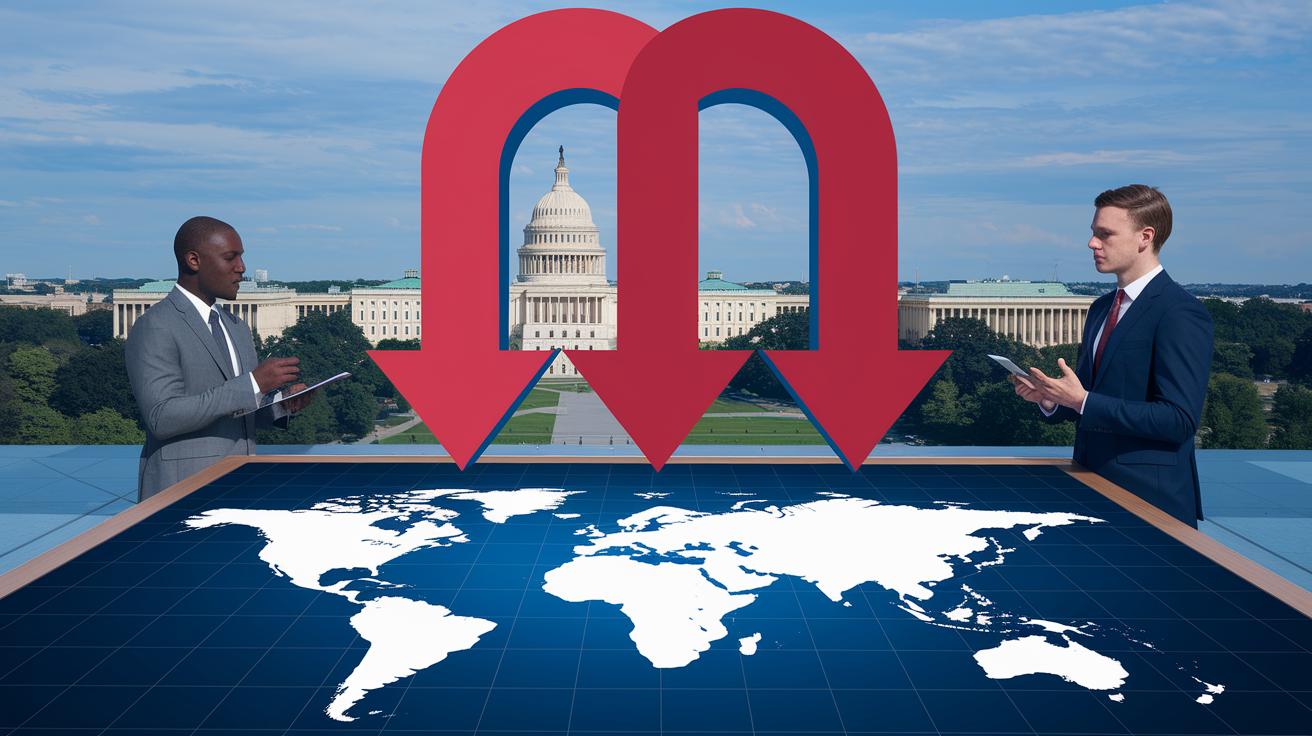
The International Monetary Fund lowered its forecast for global growth in 2025 from 3.3% to 2.8% during the IMF-World Bank Spring Meetings in Washington, D.C. The US economy also saw a downgrade, with projections dropping from 2.7% to 1.8%.
Why it matters: These adjustments hint at a broader slowdown that could impact global markets and influence strategic fiscal and monetary policies.
The revised numbers suggest that even minor forecast cuts might be a precursor to more significant drops in GDP internationally. Investors and business leaders should take note, as lower growth figures can foreshadow wider economic weaknesses.
A veteran analyst commented that strong downward revisions may reflect market expectations of upcoming disruptions. Although these figures do not signal an immediate recession, they do urge caution as markets prepare for further policy shifts and economic turbulence.
Policy Uncertainty and Protectionism Driving a Global Recession
Recent tariff moves by the US President have set off alarm bells about global trade. These tariffs are lowering growth forecasts and unsettling market confidence. One fund manager put it plainly: every new tariff is like throwing a wrench into the global machine.
Why it matters: Investment flows, business strategies, and market stability face new challenges as global trade becomes more unpredictable.
Countries are ramping up protectionist measures that restrict cross-border business and investment. With trade barriers on the rise, supply chains and credit markets could slow down. Companies are struggling to plan long-term strategies in this shifting environment, and both business investment and consumer spending are already taking a hit.
Economists warn that ongoing policy uncertainty combined with aggressive protectionism may nudge economies closer to recession. Policymakers now face the tough task of protecting domestic industries while keeping global commerce on track. Industry leaders stress that further restrictive measures could speed up a downturn across sectors, signaling a broader economic decline. Market analysts advise close monitoring of regulatory decisions and trade policies as they will heavily influence the upcoming quarters.
Expert Insights on Global Recession Risks and Market Cycles

Market trends show major shifts as key growth drivers slow down. Veteran fund manager Yaakov Weinstein warned that markets might be ending a long cycle as the fuel behind recent gains fades. He expects gains of around 10% in 2026, a drop from nearly 20% in previous cycles, and cautions that conditions could change abruptly, with a downturn similar to the Great Depression possible by the decade's end.
Both Josh Lipsky and Fed Chair Jerome Powell highlighted the challenges in predicting performance amid rapid policy changes. They noted that our limited experience with such swift adjustments makes current models less reliable. Their observations underscore significant uncertainty, prompting market players to review their risk positions when policies swing unpredictably.
Investors should take these insights seriously. They underline the need for flexible strategies, such as closely monitoring central bank responses and adjusting portfolios to counter rising volatility. This may include revising asset allocations or incorporating more defensive positions to reduce risk.
One analogy captures the sentiment: "Prepare for shifts like a sailor adjusting to sudden winds at sea." Decisions made today can help cushion against severe downturns while laying the groundwork for modest recovery. This expert commentary reminds investors that even with some growth, the risk of a major contraction remains a constant concern.
Early Warning Indicators of a Global Recession
New research shows that beyond the usual IMF data, alternative signals may warn of an economic downturn. Analysts now point to indicators like a flattening yield curve, growing corporate bond spreads, and lower industrial production numbers as markers for potential recession risk.
Before the 2008 downturn, the 2-year and 10-year Treasury yield curve inverted while corporate bond spreads jumped by around 45 basis points. This combo of factors signaled early financial stress.
Why it matters: These trends could affect capital flows and credit conditions, urging investors and policymakers to act early.
Key factors to watch:
- Changes in the yield curve that suggest tighter lending conditions.
- Wider corporate bond spreads paired with lower market liquidity.
- Declines in industrial production and the Purchasing Managers’ Index (a measure of business activity).
- Shifts in online search trends that may reflect changes in consumer sentiment.
Impacts of a Global Recession on Trade, Employment, and Sovereign Debt

Central banks are now the key drivers in managing soaring sovereign debt. Why it matters: Their tightening of credit standards and bond yield targets helps stabilize government finances amid rising borrowing costs.
New analysis shows that before these measures took effect, officials already noticed shifts in consumer demand that were influencing fiscal policies. Forecasts now warn that lower consumer spending could force employers to cut overtime, delay new hires, and adjust work schedules, potentially deepening unemployment concerns.
Mitigation Strategies for a Global Recession: Policy Responses and Global Coordination
Central banks and strong fiscal spending are leading efforts to counter recession risks. The International Monetary Fund (IMF) noted that the global economy is resetting, which calls for nations to act together. At the IMF-World Bank Spring Meetings, experts warned that clear policy moves must come quickly. Fed Chair Powell stressed that central banks need to act decisively in a crisis to maintain market liquidity and keep investor confidence high.
Monetary policy tools, such as adjusting interest rates and setting up emergency funding facilities, can steady volatile markets and boost sentiment. Fiscal measures like targeted stimulus packages and infrastructure spending support key industries and create jobs. Governments are using policy reviews and resilience plans to balance immediate relief with long-term stability.
International coordination is key to making these measures work smoothly. Nations must share data, align policies, and coordinate both fiscal and monetary responses to prevent disjointed efforts that may hinder recovery. Experts recommend multilateral discussions focused on adaptable policy frameworks that can handle fast-changing conditions. With uncertainty still high, clear communication and cooperation among policymakers are essential to reduce risks and guide the global economy toward recovery.
Policy unity now matters greatly.
Final Words
In the action, this analysis broke down how shifting policy measures and market signals could steer the economy toward a global recession. The IMF’s caution and expert insights shed light on declining growth forecasts and heightened uncertainty. Each section offered clear definitions, revised projections, and potential impacts on trade and employment. Coordinated policy responses and proactive measures remain essential for navigating future challenges.
The discussion reinforces the need for swift, informed decisions to mitigate risks while capitalizing on emerging opportunities.
FAQ
Q: What qualifies as a global recession?
A: The definition of a global recession involves recording two consecutive quarters of negative global GDP growth. It differs from a national downturn by affecting multiple economies worldwide with widespread economic slowdowns.
Q: Is a global recession expected soon?
A: Current global forecasts indicate no recession in 2023 as per IMF reports. Despite some growth revisions and policy uncertainties, global economic activity remains resilient in the near term.
Q: What are the prospects for a recession in 2025 and 2026?
A: Expert analysis highlights mixed signals. Lower global growth forecasts raise recession concerns for 2025, while projections for 2026 suggest moderate market gains, though some warn of potential severe downturn risks.
Q: Where is your money safest during a recession?
A: Safeguarding funds in a recession typically involves investing in government bonds, high-quality stocks, and cash equivalents. These options offer lower volatility and more stable returns during economic downturns.
Q: Why was the 2008 recession considered global?
A: The 2008 recession was deemed global because financial systems and trade networks were interlinked, leading to simultaneous banking crises and economic slowdowns across numerous major economies.
Q: What insights can historical data provide on global recessions?
A: Historical charts help trace recession periods across the globe. They provide context by comparing market downturns, demonstrating trends and patterns that can inform current recession risk assessments.
Q: What topics are discussed online about global recessions?
A: Online forums, including Reddit, frequently explore market trends, potential recession triggers, and investor sentiment. These discussions offer grassroots insights and diverse perspectives during uncertain economic periods.