


UK Trade Deal Signals New Post-Brexit Era
The Economic Prosperity Deal cuts tariffs on 25% of UK exports to the US, including auto parts, aerospace components, and beef. The deal, currently under discussion, could double bilateral trade over the next decade.
Why it matters: Businesses may lower costs and boost earnings as fresh transatlantic ties replace old high-tariff policies.
This move marks a significant shift in UK-US economic relations and hints at broader changes in trade strategy following Brexit.
Key Elements of the UK’s Latest Trade Deal
The Economic Prosperity Deal (EPD), announced on May 8, 2025, is a clear move by the UK to ease tariff costs on about 25% of its exports to the United States. The agreement targets key sectors including automotive, steel, aluminium, beef, and aerospace, with an emphasis on engines and parts. In exchange, the UK will reduce duties on main US exports such as beef and ethanol, aiming to lower business costs as it moves away from past high-tariff policies.
Why it matters: This deal is expected to double trade between the two nations over the next decade, setting the stage for a refreshed approach to British economic diplomacy after Brexit.
Although the document is not binding and awaits further talks, it signals the UK's commitment to market reform amid evolving transatlantic economic ties. The agreement comes as both sides work to expand trade benefits across multiple sectors.
Key points:
- Automotive tariffs will drop significantly under a set export quota.
- Duties on aerospace engines and components will be cut to improve production efficiency.
- Beef and ethanol exports will benefit from lower tariffs, easing cost pressures for companies.
- Negotiations will continue to reduce additional tariffs affecting other sectors.
- Pharmaceutical exports will be revisited in upcoming discussions.
This move encourages market players to reassess their strategies while paving the way for stronger competitive positioning in transatlantic trade.
UK Trade Deal: Tariff Adjustments and Sector-Specific Measures

UK exporters face significant tariff changes in four main sectors. Automotive tariffs drop sharply from 27.5% to 10% by June 2025, with a firm annual quota of 100,000 units. Steel and aluminium duties stay at 25% until future adjustments. Beef and aerospace products enjoy faster tariff relief, easing production and export costs immediately. The government will also review pharmaceutical export tariffs to lessen non-tariff barriers.
| Sector | Pre-Deal Tariff | Post-Deal Tariff | Quota |
|---|---|---|---|
| Automotive | 27.5% | 10% | 100,000 units |
| Steel & Aluminium | 25% | 25% | N/A |
| Beef | Current rate | Lowered rate | N/A |
| Aerospace | Standard rate | Reduced rate | N/A |
Why it matters: Lower tariffs can reduce costs and make UK exports more competitive worldwide. Companies in these key sectors may adjust production strategies to seize new market opportunities.
UK Trade Deal: Bright Brexit Update
- On May 8, 2025, UK and US leaders announced the Economic Prosperity Deal, launching new cross-Atlantic trade initiatives.
- On June 3, 2025, a US statement warned that without finalizing the deal by July 9, the UK could lose its exemptions on steel and aluminum.
- The agreement must be completed by July 9, 2025, to avoid triggering higher tariffs on key commodities.
- On June 16, 2025, a presidential order went into effect, reducing tariffs on automotive and aerospace exports and easing market pressures.
- By early September 2025, the US Treasury Secretary intends to wrap up the remaining negotiations and bilateral discussions.
These key dates highlight the tight timeline and risks as both sides work out the final details. The July 9 deadline is critical, as any delay could lead to higher tariffs and hinder broader improvements in transatlantic trade ties. Even with a possible extension until early September, market players should remain alert as the final framework for the Economic Prosperity Deal takes shape.
Projected Economic Impact of the UK Trade Deal

The Economic Prosperity Deal is set to double bilateral trade over the next decade by cutting tariffs on motor vehicles, aerospace, steel, aluminum, and even niche products like beef (which made up less than 1% of UK agricultural exports to the US in 2023). Harvard Atlas of Economic Complexity and the Office for National Statistics data confirm that lowering trade barriers can significantly boost export volumes and manufacturing output. However, tariff exposure in services, such as financial exports, could keep challenges alive in the near term.
This deal is not just about higher trade volumes. It is expected to drive improved productivity, create more jobs, and lift wages across key sectors. Companies in affected industries will likely adopt more efficient production methods and innovative practices to take advantage of new market access. Analysts say that tougher competition will also help drive operational efficiencies.
Why it matters: These changes could give the UK a stronger global competitive edge while fueling overall economic growth.
- Doubling bilateral trade within ten years
- Enhanced competitiveness in key industrial sectors
- Increased manufacturing productivity
- Growth in employment levels and wage improvements
- Expanded overall economic output
UK Trade Deal Regulatory Alignment and Non-Tariff Barrier Reforms
The Economic Prosperity Deal aims to simplify cross-border trade rules while addressing post-Brexit regulatory mismatches. Both the UK and the US will negotiate Mutual Recognition Agreements to align standards and cut administrative burdens for exporters.
Why it matters: This initiative could streamline market access and reduce red tape across sectors, affecting capital strategies and operational risks.
Key steps include:
- Agree on Mutual Recognition Agreements to harmonize standards.
- Launch formal talks to ease import restrictions on pharmaceuticals.
- Cut non-tariff barriers that slow down trade in both goods and services.
- Arrange further discussions to align domestic rules with global practices.
The current short-form document remains non-binding, so import taxes on service exports still apply for now. However, this phased strategy sets the stage for immediate tariff adjustments coupled with gradual regulatory reforms, which could stabilize market expectations over time.
Next, detailed legal texts will be negotiated to enforce these changes, with stakeholders watching closely for adjustments in import tax obligations and customs procedures.
Next Steps and Future Trajectories for UK Trade Deals
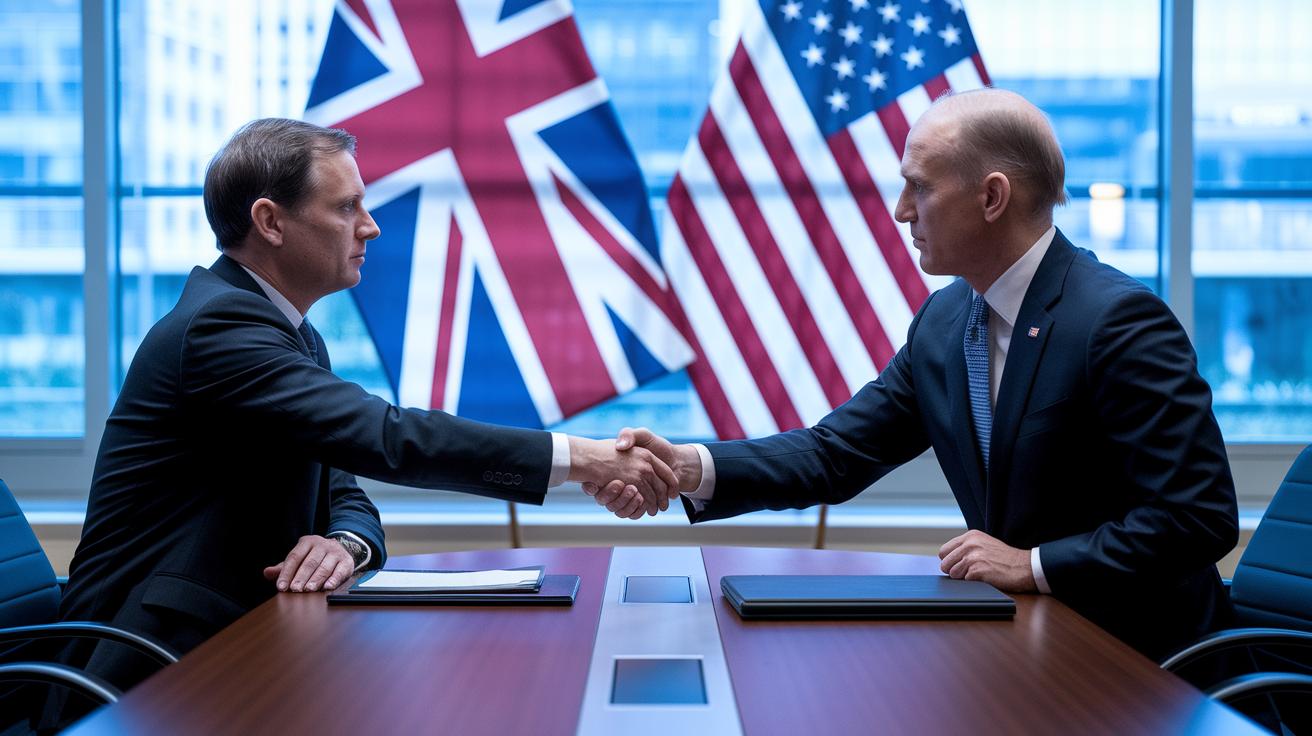
UK and US negotiators must sign a binding agreement by July 9, 2025 to avoid triggering tariff suspensions. Treasury guidance indicates an extension until early September may be possible, giving both sides extra time to settle the details. Immediate talks will also address extending tariff cuts to pharmaceuticals and other sectors, using lessons learned from the Economic Prosperity Deal. This process lays the foundation for future agreements with important global partners as policymakers pursue more bilateral and multilateral accords after Brexit.
Why it matters: The evolving deal landscape means British trade relationships could shift significantly, potentially affecting tariffs, market access, and regulatory standards.
| Partner | Deal Focus |
|---|---|
| European Union | A revised agreement with sharper rules on digital commerce and industrial exports |
| India | A market access pact to lower tariffs and boost services cooperation |
| Australia | A bilateral accord focused on investment and services to increase cross-border investments |
| Japan | A comprehensive deal enhancing trade, technology cooperation, and economic exchanges |
Stakeholders see these opportunities as key building blocks for reshaping Britain’s global trade framework. Each negotiation offers a chance to align domestic reforms with international market access, potentially redefining Britain’s economic partnerships. Executives and investors will need to keep a close eye on these talks as shifts in tariffs and regulatory policies roll out across the global market.
Final Words
In the action, the blog outlines the key elements of the UK’s latest trade deal, detailing tariff adjustments, sector opportunities, negotiation timelines, and regulatory reforms. It presents clear figures on export changes and expected economic boosts.
Market watchers should note that this uk trade deal could double bilateral trade in the next decade. The analysis underscores the importance of remaining alert to evolving market scenarios, providing fresh opportunities for strategic moves and informed investment decisions.
FAQ
Q: What was the UK trade deal?
A: The UK trade deal refers to the Economic Prosperity Deal (EPD) announced May 8, 2025, between the UK and the US, featuring tariff cuts in key sectors such as cars, steel, and beef.
Q: What is the US-UK deal May 2025?
A: The US-UK deal May 2025 is the Economic Prosperity Deal (EPD) that sets out provisional tariff reductions and sector-specific measures, pending detailed regulatory texts and formal negotiations.
Q: How does the US-UK trade deal impact tariffs?
A: The US-UK trade deal impacts tariffs by reducing charges on around 25% of UK exports, lowering automotive tariffs from 27.5% to 10% under quotas, and providing immediate relief in sectors such as aerospace.
Q: What role does the U.S. Executive Order play in the US-UK trade deal?
A: The U.S. Executive Order mandated tariff cuts in the automotive and aerospace sectors, expediting key measures and signaling strong government support for the trade arrangement.
Q: What information does the White House provide on the US-UK trade deal?
A: The White House has confirmed the trade deal through official announcements and executive orders, highlighting tariff adjustments and sector-specific reforms as part of broader economic diplomacy.
Q: What is the status of the US-UK trade deal today?
A: The trade deal remains provisional, with initial tariff changes implemented while final negotiations work toward detailed regulatory frameworks and legally binding terms.
Q: What can be learned from the US-UK trade deal wiki?
A: The US-UK trade deal wiki offers a summary of the Economic Prosperity Deal (EPD), including key terms, dates, and sector impacts, serving as a quick reference guide for trade policy.
Q: What is the UK trade deal with India?
A: The UK trade deal with India is a separate negotiation from the EPD with the US, focusing on market sectors and bilateral economic interests unique to the India-UK trade relationship.
Q: How does the phrase “UK trade deal Trump” fit into the discussion?
A: The phrase “UK trade deal Trump” reflects past trade policy narratives; the current EPD builds on lessons from that era while introducing updated measures for today’s economic landscape.
Q: Is NAFTA the same as USMCA?
A: NAFTA and the USMCA differ, with the USMCA updating trade rules between the United States, Canada, and Mexico, while NAFTA was the original agreement replaced by the revised deal.
Q: What is the UK-US pricing deal about?
A: The UK-US pricing deal addresses tariff and quota adjustments that align export price structures, ensuring competitive positioning in transatlantic markets amid revised trade conditions.