


Market Structure Shapes Your Bottom Line
Market structure plays a key role in setting prices, driving competition, and directing resource allocation. When many small businesses compete against a few dominant players, pricing strategies change. It becomes clear that how buyers and sellers engage can impact profit margins significantly.
Why it matters: Business leaders and investors can use these insights to adjust strategies and stay competitive.
Understanding these market models offers a practical guide for making informed decisions in any business environment.
Market Structure: Clear Concepts & Comparisons
Market structure explains how buyers and sellers interact to shape pricing, resource allocation, and competition. Why it matters: Leaders and investors can use this insight to gauge market health and adjust strategies accordingly.
Understanding market dynamics is key, especially in global trade. The way firms operate not only drives consumer prices but also influences overall sector performance. Key factors include the number and size of firms, how different products are, barriers to entering or leaving the market, pricing power, and how available and costly information is.
Reviewing these elements lets analysts determine market competitiveness and predict price changes. Markets filled with many small firms usually see intense competition that pushes prices down, while markets controlled by a few companies tend to allow higher prices due to their pricing influence. This framework helps decision-makers allocate resources effectively and adjust their strategies to stay competitive.
Perfect Competition Market Structure Explained
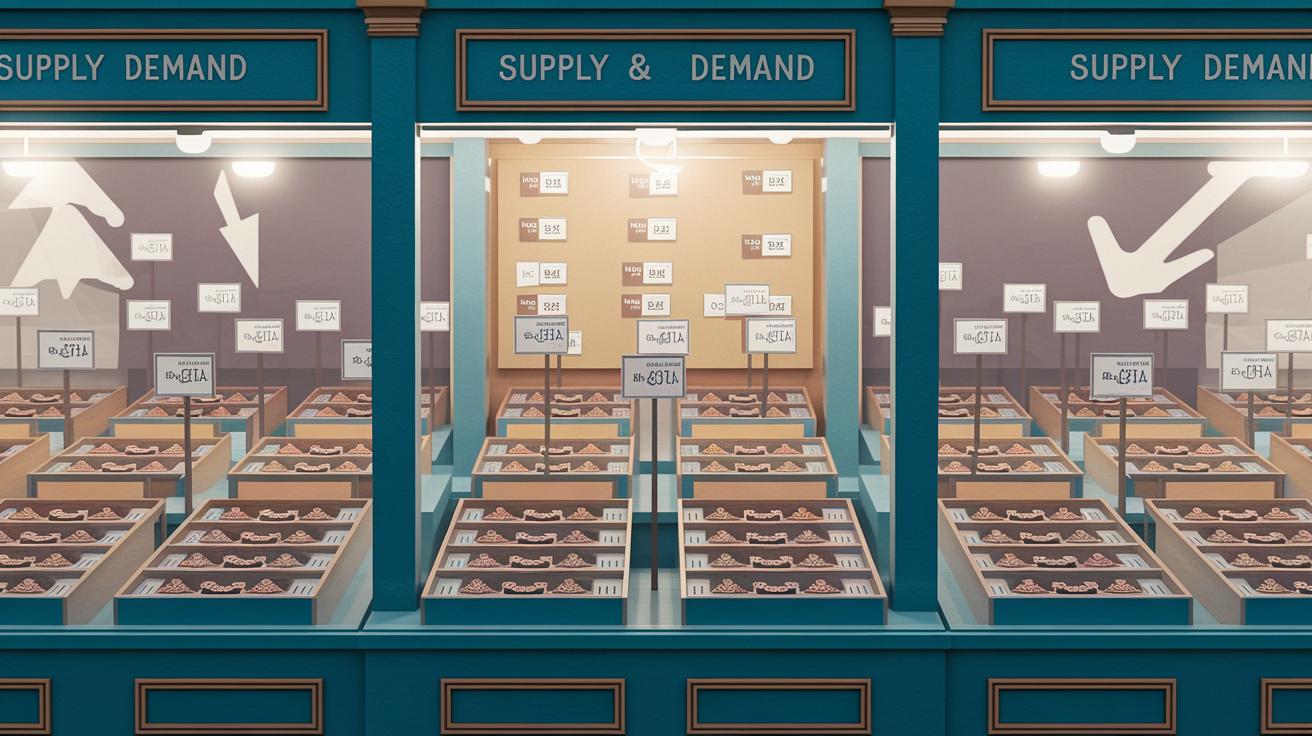
In a perfect competition market, numerous small firms sell identical products. There are no obstacles stopping new companies from entering or exiting, so businesses can join quickly. Firms accept the market price as given, ensuring that no one company controls pricing. This model promotes efficient resource use and a fair contest for all competitors.
Key features include many sellers, homogeneous products, and complete market transparency. Consumers treat all products as interchangeable, and all market players have access to the same supply and demand details. This forces companies to compete on price, which means no single firm can secure pricing power, ultimately rewarding operational efficiency.
Why it matters: High demand elasticity means customers can easily switch suppliers if prices rise, increasing competitive pressure. As a result, price competition drives costs down and ensures resources are allocated effectively. Businesses must run efficiently to survive, making perfect competition a useful benchmark for economic performance and strategic planning.
Monopoly Market Structure and Key Implications
A monopoly is when one firm controls an entire market, squeezing out competition and leaving consumers with few options. This often happens in sectors that require heavy upfront investment and control of crucial resources.
Why it matters: Fewer competitors can lead to higher prices and slower improvements in products and services.
Natural monopolies are a prime example. In industries such as utilities, one provider can deliver services more efficiently than any new entrant because of economies of scale. High barriers, like exclusive access to infrastructure or strict regulatory licenses, help these firms keep rivals at bay. That in turn stifles innovation and reduces the pressure to lower prices or enhance service.
Monopoly firms also tend to set prices higher than in competitive markets. With no real alternatives available, consumers end up paying more, even if the service quality doesn’t improve. Understanding these dynamics is vital for executives and investors assessing the balance between firm dominance and regulatory oversight.
Oligopoly, Duopoly, and Monopsony in Market Structure

Concentrated market setups put a few major players in charge of pricing, supply, and competition. This matters because their actions drive market behavior and influence strategic choices.
Oligopoly
In an oligopoly, a few large firms dominate the market. They closely monitor each other's moves when setting prices or adjusting output. For example, top car manufacturers keep an eye on rivals to protect their market share and quickly respond to consumer shifts.
Duopoly
A duopoly consists of two major firms whose decisions directly impact one another. Each company’s pricing and production choices affect the other, shaping the overall market. In the aerospace field, for instance, the actions of these two leaders drive both innovation and pricing trends.
Monopsony
In a monopsony, one buyer wields considerable power over its suppliers. Big retailers, for example, can negotiate lower costs and better terms by controlling demand. This strong buying position forces suppliers to tweak their pricing strategies, ensuring the buyer remains highly influential.
Comparing Market Structure Models: Key Features Table
This summary compares five market models based on firm count, entry challenges, and price-setting power. It shows how these elements shape competition and influence pricing decisions.
| Structure | Number of Firms | Barriers to Entry | Price Control |
|---|---|---|---|
| Perfect Competition | Many small firms | None to minimal | None – price takers |
| Monopoly | Single firm | High | Strong; sets prices |
| Oligopoly | Few large firms | Moderate | Some influence |
| Duopoly | Two dominant firms | Significant | Interdependent |
| Monopsony | Single buyer | Low for suppliers | Buyer sets terms |
Impact of Market Structure on Pricing, Competition, and Regulation

Market structure shapes how companies price their offerings and compete for customers. In markets with many small players, fierce competition drives prices down as each firm strives to provide the best deal. Conversely, in markets dominated by a few large companies, these firms often have the power to set higher prices, which can limit customer choices and stifle innovation.
Why it matters: Changes in market structure can influence consumer spending and overall market dynamics, affecting both business strategy and regulatory oversight.
Regulators step in to keep these disparities in check. They use antitrust rules and consumer protection policies to prevent unfair practices like price fixing and collusion. For example, financial service regulators (https://realrealnews.com?p=510) closely monitor firm behavior to ensure the market remains competitive and fair, which supports long-term economic growth.
Understanding market structure is key for both businesses and policymakers. Companies can adjust their strategies to better compete in evolving markets, while regulators can craft rules that promote fairness and efficiency. This knowledge is essential for achieving balanced growth and minimizing risks across various sectors.
Final Words
In the action, the post mapped out how different market structures, from perfect competition to concentrated models like oligopolies and duopolies, influence pricing and competitive dynamics. It explained how supply and demand set the stage for strategic decisions and resource allocation. Regulatory shifts and trade environment nuances further shape these economic models. This breakdown of market structure helps clarify implications for pricing, competition, and policy. Ultimately, these insights empower decision-makers to spot opportunities and act swiftly in a shifting business environment.
FAQ
Frequently Asked Questions
Market structure book
The market structure book explains how markets are organized by outlining the interaction between buyers and sellers, firm sizes, entry barriers, and pricing power among industry players.
Market structure in economics
The market structure in economics defines the framework where buyers and sellers interact, influencing pricing, resource allocation, and competition through factors like firm distribution and product differences.
Market structure forex
The market structure forex approach examines patterns in currency trading by analyzing supply, demand, and price trends to help traders make risk-informed decisions.
Market structure trading
The market structure trading method focuses on understanding competitive environments, using insights on firm behavior, price formation, and market dynamics to guide strategic trading decisions.
What are the 4 types of market structure and examples (including 4 types of market structure and examples)?
The 4 types include perfect competition, monopolistic competition, oligopoly, and monopoly. Each type is defined by firm numbers, differentiation, and entry barriers, with examples such as agriculture for perfect competition and utilities for monopoly.
Market structure in economics PDF
The market structure in economics PDF typically provides detailed explanations and case studies on how different market frameworks affect pricing, competition, and resource distribution in real-world economies.
What is market structure meaning and example?
The market structure meaning refers to the way markets are organized, with examples ranging from perfectly competitive environments to monopolies, highlighting differences in pricing, competition, and resource allocation.
Perfect competition market structure
The perfect competition market structure is characterized by many small firms selling identical products, resulting in minimal entry barriers and efficient resource distribution driven by intense price competition.
How do you identify market structure?
The market structure is identified by analyzing factors such as the number of firms, product differentiation, entry barriers, pricing power, and information costs, which together determine competitive dynamics.
What is the 5 structure of the market?
The 5 structure of the market expands traditional models to include perfect competition, monopolistic competition, oligopoly, monopoly, and monopsony, each impacting pricing and competitive behavior in distinct ways.