

US Economy Faces Downturn; Leaders Prepare for Change
The US economy may slip into a recession within the next 18 months, according to recent indicators. Why it matters: Tighter borrowing conditions could force executives to reexamine capital and growth strategies now.
Despite trillions of dollars in post-COVID stimulus and a period of low rates, rising inflation and an inverted yield curve point toward tougher lending conditions. Investors are now facing more expensive credit, which could slow market activity.
Some business leaders, however, see this as a chance to adapt. They are revising their strategies to manage short-term challenges while working to ensure long-term financial stability. Markets and decision-makers should watch these shifts closely as they could signal changes in risk and strategy ahead.
Assessing Recession Risk: An Economic Downturn Overview
The US economy faces a potential recession within the next 18 months. Domestic challenges and international pressures are combining to increase financial instability. After COVID, policymakers pumped $3.3 trillion into the market and dropped rates to 0–0.25% to boost demand. Even so, inflation reached 9.1% in June 2022 and, although it has eased somewhat, the Consumer Price Index rose 3.7% from September 2022 to September 2023. A flipped Treasury yield curve and recent rate hikes up to 5.25% suggest long-term confidence is waning.
Why it matters: Investors and business leaders need to prepare for tougher borrowing conditions and slowing economic growth.
Key risk drivers include:
| Risk Factor | Summary |
|---|---|
| QE Overspending | Excessive post-COVID monetary stimulus |
| Inflation Trends | High and volatile price increases |
| Yield-Curve Inversion | Short-term yields exceeding long-term yields |
| Fed Policy Shifts | Rapid rate hikes designed to control inflation |
| Global Headwinds | International slowdowns and supply-chain issues |
Policymakers' aggressive stimulus measures initially boosted demand but have now created challenges. Companies face heavy balance sheet pressures while limited fiscal reserves leave them exposed. Meanwhile, the Fed's consistent rate increases raise borrowing costs across sectors, setting the stage for tighter credit and slower growth. The inverted yield curve, a traditional recession warning, adds to the caution among investors.
As market uncertainty grows, corporate leaders and investors are reassessing their strategies. They are weighing quick policy wins against the risk of prolonged economic strain due to reduced credit availability and persistent global challenges.
Key Downturn Indicators for Gauging Recession Risk

Short-term interest rates have recently topped long-term rates, a Treasury yield curve inversion that has been in place since late 2023. Investors are shifting away from long-dated bonds as confidence wanes, setting the stage for a potential slowdown in economic growth.
Why it matters: This trend warns executives and investors that a slowdown may be on the horizon, affecting borrowing conditions and spending patterns.
Meanwhile, the Consumer Price Index climbed 3.7% year-over-year from September 2022 to September 2023, following its 9.1% peak in June 2022. Persistent inflation continues to tighten consumer budgets and could force a pullback in spending.
Recent data also shows that financial pressure is building across multiple indicators. Credit-card delinquency rates among younger Americans have risen since the end of 2021, highlighting strains on household finances. In Q3 2023, bank debt rates surged nearly 5%, and the recent restart of student loan payments after a three-and-a-half-year pause is adding to these fiscal challenges.
| Indicator | Current Value | Historical Average |
|---|---|---|
| Yield-curve inversion | Inverted since late 2023 | Upward sloping |
| CPI change | 3.7% YoY | ~2.5% |
| Delinquency rate | Elevated among younger Americans | Stable low levels |
| Bank debt rate | Nearly +5% in Q3 2023 | Lower by 3-4% |
Why it matters: These indicators signal that tougher borrowing conditions could further reduce consumer spending and slow overall economic activity. Analysts note that a similar yield-curve inversion in 2007 preceded a recession by 12 to 18 months, emphasizing the need for close monitoring of these trends.
Historical Yield-Curve Inversion and Recession Patterns
US credit markets have shown warning signs when the yield curve inverts. This situation, where short-term rates exceed long-term rates, usually signals economic stress and typically leads to a downturn 12–18 months later.
In the early 1980s, short-term interest rates climbed above long-term rates as the economy grappled with rising rates and tighter credit. From 2007 to 2009, a similar inversion appeared before the financial crisis, amidst tightening credit and falling market sentiment. Even in 2020, a brief inversion occurred as policy rates were lowered, hinting that the economy was bracing for a slowdown.
Today, investors see another yield-curve inversion alongside a 5.25% policy rate. This pattern mirrors past events and suggests that market players should prepare for potential economic pressure ahead.
Recession Risk Sparks Economic Confidence

Energy prices surged in October 2023 as Brent crude climbed to $95 per barrel, up $25 since the summer. This jump is driving higher costs for manufacturers and service providers, squeezing profit margins and pushing consumer prices higher. Companies with energy-heavy operations now face tough choices on pricing and supply chain adjustments, potentially destabilizing the market.
Why it matters: Rising energy costs and tough supply chain decisions could impact corporate earnings and market stability.
Global pressures add uncertainty. A severe property crisis in China and a 21% youth unemployment rate have disrupted international supply chains relied on by many U.S. businesses. Lower demand abroad combined with bottlenecks at home creates an unpredictable market environment that alarmed investors and corporate leaders.
Key challenges include:
- Layoffs: Tech firms cut 253,000 jobs in 2023, undermining workforce stability and consumer confidence.
- Debt service pressures: Companies struggle with higher repayments on costly debt, reducing financial flexibility.
- Property-sector stress: Tightening real estate conditions are straining portfolios, especially for firms with significant property exposure.
- Funding-cost increases: Rising borrowing costs and high policy rates inflate capital expenses for growth and restructuring.
Banking systems face their own hurdles. High federal rates and previous rounds of aggressive credit expansion have strained bank balance sheets. This is leading to tighter lending, which may slow economic activity further. Meanwhile, emerging-market issues could quickly spread risks to U.S. financial institutions, deepening concerns over a broader economic downturn.
Impact on Consumers, Labor Markets, and Businesses
Companies are overhauling workforce strategies as labor market shifts accelerate. Job cuts have forced a reassessment of hiring practices, with more firms turning to automation and contract work to streamline operations.
Falling incomes are reshaping consumer habits. Demand for non-essential items such as travel, dining, and luxury goods is declining, which in turn is altering revenue streams for industries once reliant on extra spending.
- Unemployment: Shifts in the job market are intensifying competition as companies adopt new employment models.
- Delinquency: Rising credit defaults signal increased financial pressure on households.
- Mortgage strain: Higher interest rates are tightening borrowing conditions and reducing home affordability.
- Margin compression: Cost pressures combined with shifting demand are squeezing corporate profit margins.
- Spending pullback: Reduced spending on discretionary items is forcing a realignment of revenue patterns in consumer-driven sectors.
Changing sentiment among consumers and business leaders points to long-term market recalibrations. Companies are reexamining cost structures and strategic investments, while industries hit by lower discretionary spending are actively seeking new revenue opportunities to counter tighter consumer budgets.
Policy Measures and Mitigation Strategies Against Recession Risk
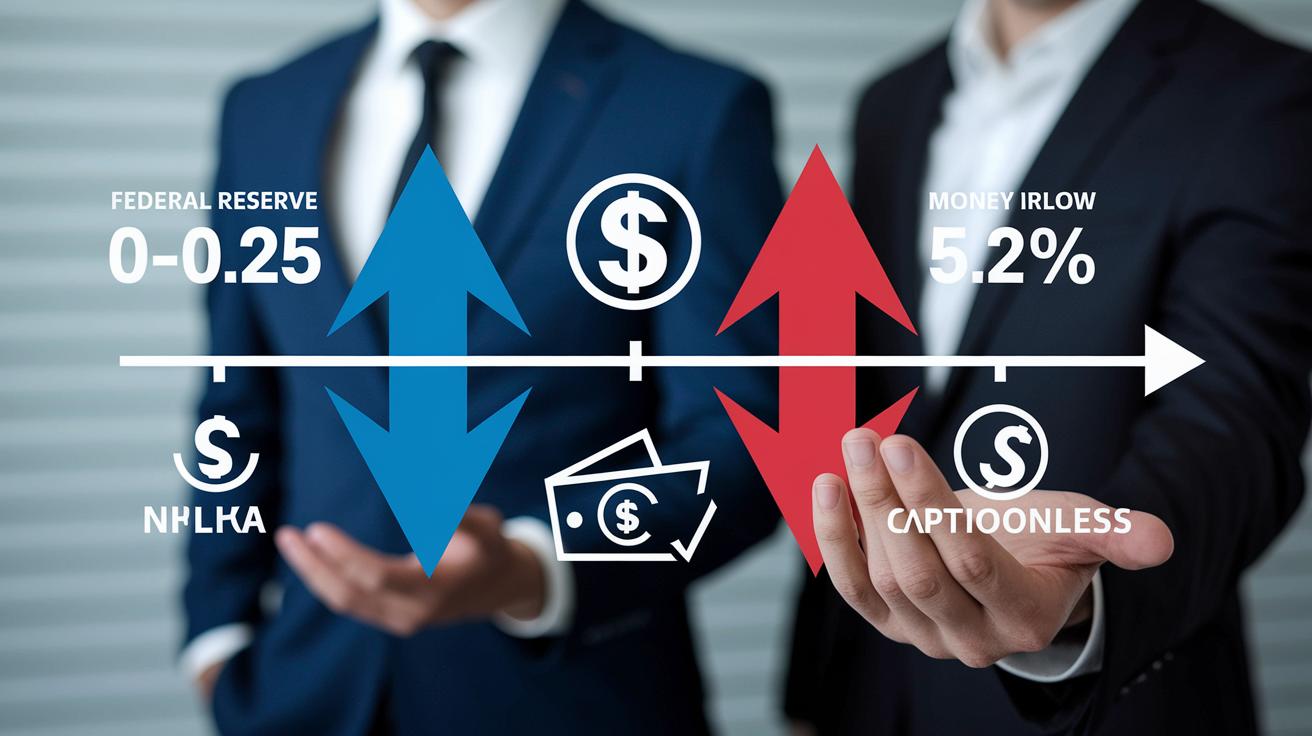
The Fed's actions have shifted dramatically in recent years. In early 2020, the central bank kept rates at 0–0.25% while injecting $3.3 trillion into the economy to boost spending. This move supported economic activity but also pushed prices higher. By late 2023, to tackle rising inflation, the Fed raised rates to 5.25%. This move reflects a careful balancing act: encouraging growth on one hand while slowing inflation on the other.
Why it matters: Decision makers now face a more complex landscape, where each policy tool can shape capital flows, investment, and consumer spending.
Key intervention types include:
- Rate adjustments
- Balance-sheet run-off
- Fiscal spending
Rate adjustments directly affect borrowing costs and help cool overheated sectors. However, sharp increases may lead to reduced investments and lower consumer spending. A balance-sheet run-off, which steadily pulls back stimulus from the market, aims to curb excess liquidity without sparking sudden market shifts. Still, if not timed well, it could unsettle debt markets. Fiscal spending involves targeted government outlays meant to support crucial sectors and boost demand, but its impact can be limited by high federal debt and potential market distortions when not carefully managed.
Each tool carries its own set of benefits and risks. Rate hikes can control inflation but may restrict credit. Gradually shrinking the balance sheet can ease market liquidity, yet it might cause volatility if mismanaged. Meanwhile, fiscal spending can fortify key industries but must be deployed thoughtfully to avoid inefficiencies.
Forecast Outlook: Recession Projections and Recovery Timelines
Economists expect significant changes soon. Recession risks are set to develop in 2024, with a recovery period spanning 12 to 18 months. Economic pressure will hit its peak next year, and a broad rebound is unlikely until mid-2025 due to high interest rates and growing debt. In 2024, the downturn probability is high, with 2025 showing early signs of stabilization and 2026 pointing to further improvement, though uncertainty remains.
Why it matters: Executives and investors should plan for a prolonged recovery and keep a close watch on debt and interest rate shifts.
| Year | Recession Probability | Recovery Phase |
|---|---|---|
| 2024 | High | Recession impact crystallizes |
| 2025 | Moderate | Initial recovery underway |
| 2026 | Lower | Post-crisis rebound phases |
Factors that could shift this timeline include changes in energy prices. If Brent crude reaches about $93 per barrel as expected, the outlook may change. Policy adjustments aimed at addressing debt and liquidity could further alter the recovery pace. Conversely, a surge in inflation or rising geopolitical tensions might delay the rebound even more. Keeping a close eye on these indicators is crucial for adapting market strategies in the coming years.
Final Words
In the action, the article broke down key triggers of a potential economic downturn. We outlined driver signals including QE overspending, inflation trends, yield-curve behavior, policy shifts, and global headwinds.
The review emphasizes that rising recession risk demands close market monitoring and strategy adjustments. Clear statistical indicators and historical lessons serve as a timely reminder for decision-makers to prepare with informed, agile responses. The overall outlook remains positive as market players adapt to the evolving economic environment.
FAQ
What is a recession?
A recession signifies a substantial economic downturn where GDP declines, unemployment rises, and consumer spending falls, reflecting a sustained period of weakened economic activity.
How is recession risk measured and predicted?
Recession risk is measured using indicators like inverted yield curves, credit trends, inflation, and market sentiment, with predictions based on quantitative easing data and policy shifts from institutions like the Fed.
Is a recession coming in 2025 or 2026?
Recession signals suggest economic stress may arrive as soon as 2025, while some forecasts extend risk into 2026, based on global economic headwinds and domestic fiscal policy challenges.
How bad will the next recession be?
The next recession could show significant declines in GDP and rising unemployment, driven by factors like high inflation and tightening credit, impacting corporate earnings and market confidence.
What will happen if the US goes into a recession?
Entering a recession would decrease consumer spending, strain business profits, and elevate unemployment, while policymakers might intervene with monetary and fiscal measures to stabilize the market.
How can one prepare for a potential recession in 2025?
Preparing for a recession in 2025 involves diversifying investments, reducing unnecessary debt, following economic indicators, and staying informed about policy changes that may affect financial markets.
What do economic metrics like GDP, inflation, unemployment, income, and market trends indicate?
Economic metrics such as GDP decline, rising inflation, increasing unemployment, stagnant incomes, and market volatility signal stress in the economy, offering early warnings for a possible downturn.